Open post

Public Lecture: Dr Jelena Pesic “The 2D Materials Revolution: Potential of Semiconductor Nanonetworks”

Public Lecture: Dr Jelena Pesic "The 2D Materials Revolution: Potential of Semiconductor Nanonetworks"

Date:

Place:

Type of Activity:

April 8th 2025

ILIJA M. KOLARAC ENDOWMENT

D&C&E activity

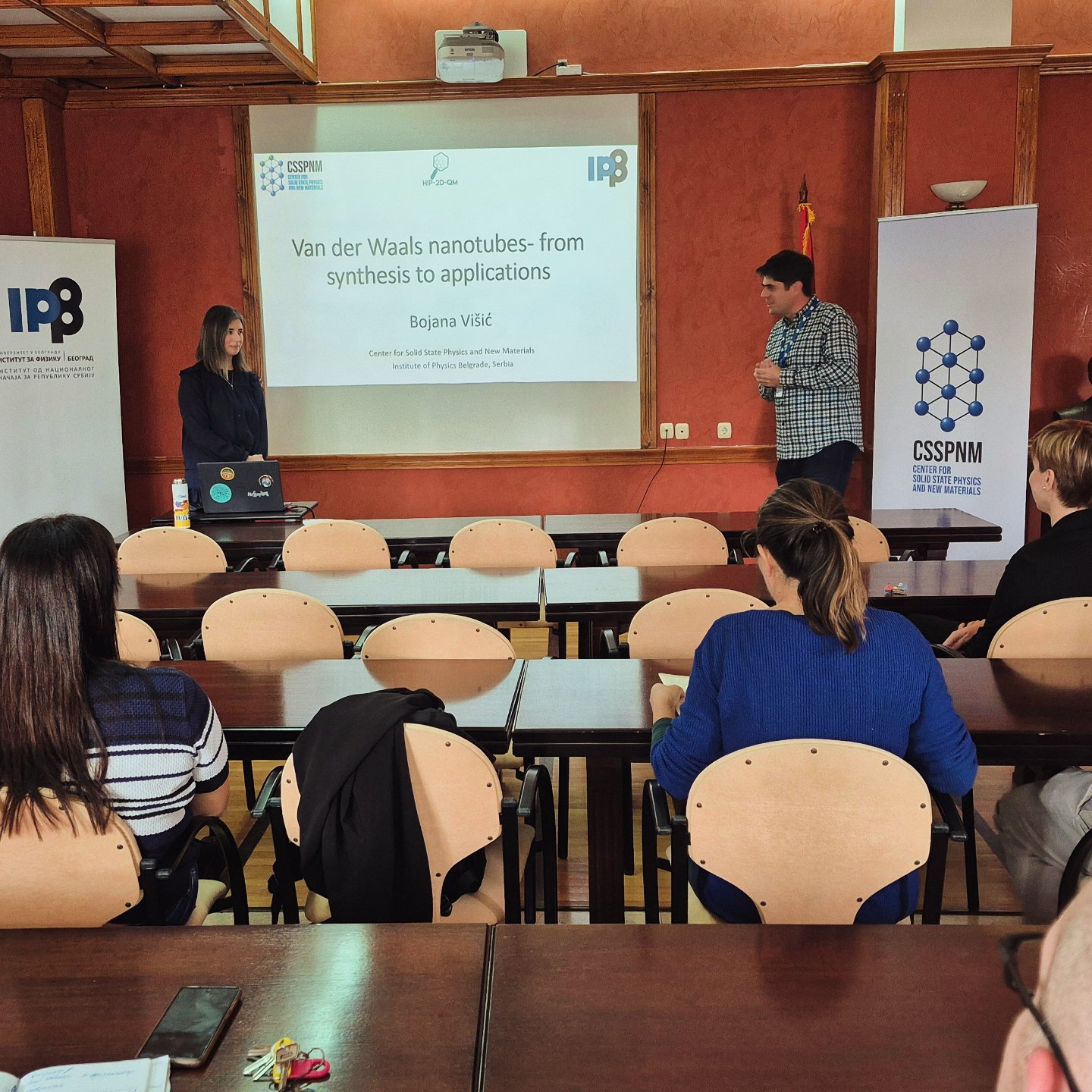
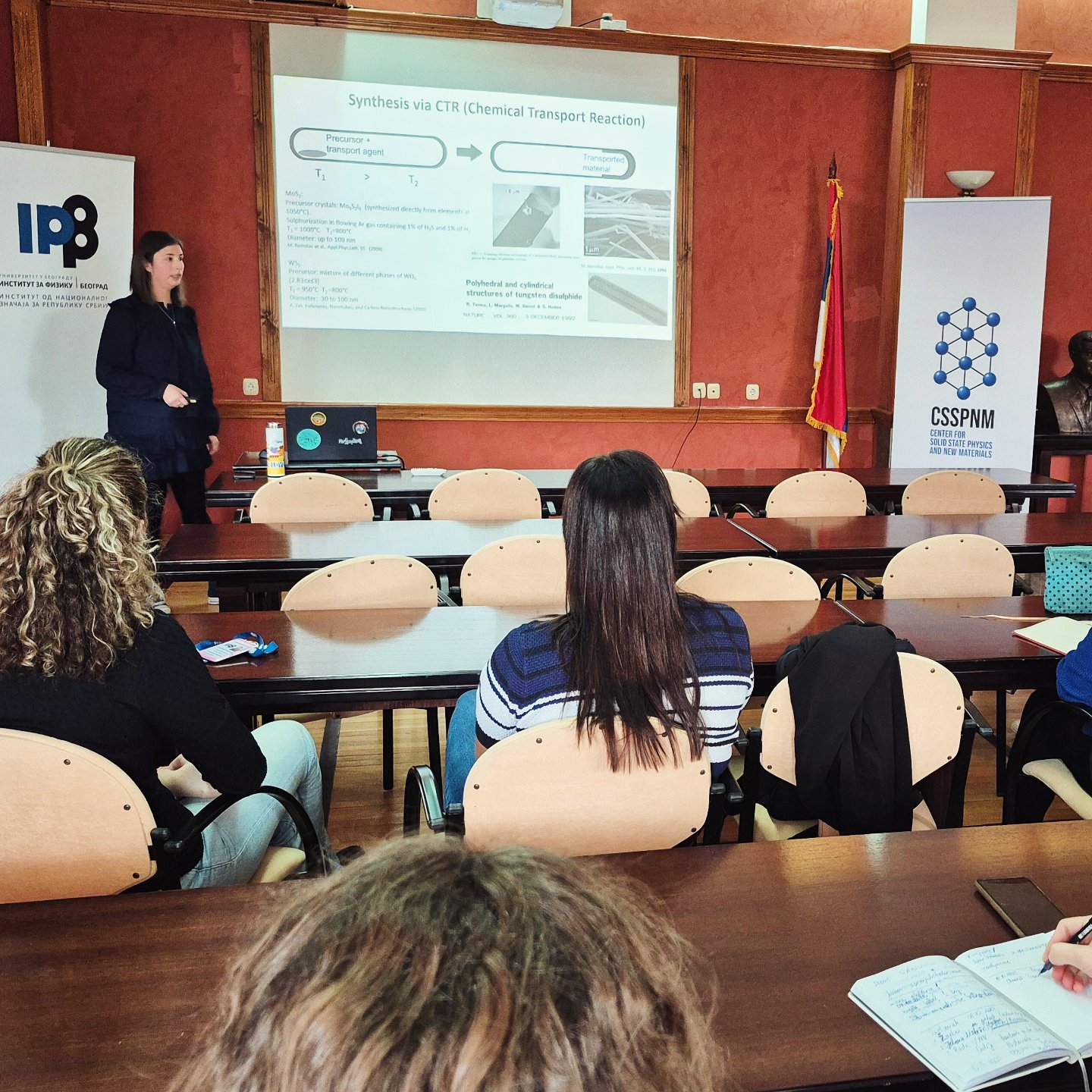
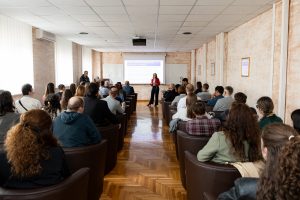
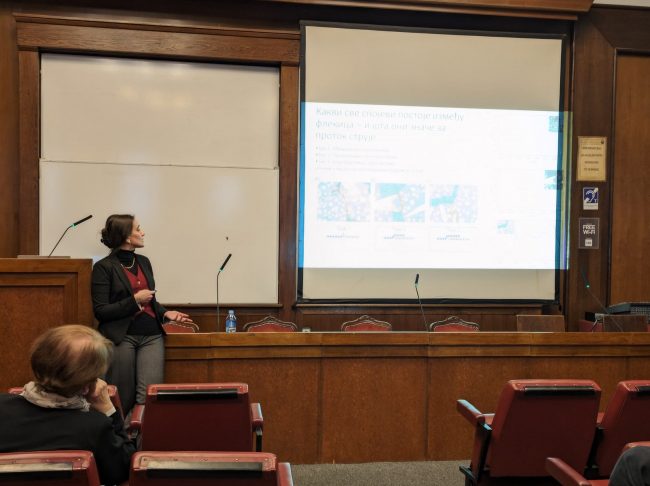
On April 8, 2025, Dr. Jelena Pešić from the Institute of Physics Belgrade delivered a lecture titled "The 2D Materials Revolution: Potential of Semiconductor Nanonetworks" at the Ilija M. Kolarac Endowment. This event was part of the "New Materials" public lecture series, organized in collaboration with the Institute of Physics in Belgrade.

Dr. Pešić discussed the remarkable properties of two-dimensional (2D) materials, such as graphene and molybdenum disulfide (MoS₂), emphasizing their potential applications in nanoelectronics, sensors, and energy devices. She highlighted the significance of 2D material nanonetworks, particularly those composed of interconnected MoS₂ nanosheets, in facilitating the fabrication of complex devices. These structures pave the way for cost-effective and scalable technologies, including next-generation transistors, sensors, and flexible electronics.

Open post

Public Lecture: Dr Emil Bozin “Detection of nanoscale hidden phases in quantum materials at large-scale research facilities”

Public Lecture: Dr Emil Bozin "Detection of nanoscale hidden phases in quantum materials at large-scale research facilities"

Date:

Place:

Type of Activity:

April 1st 2025

ILIJA M. KOLARAC ENDOWMENT

D&C&E activity

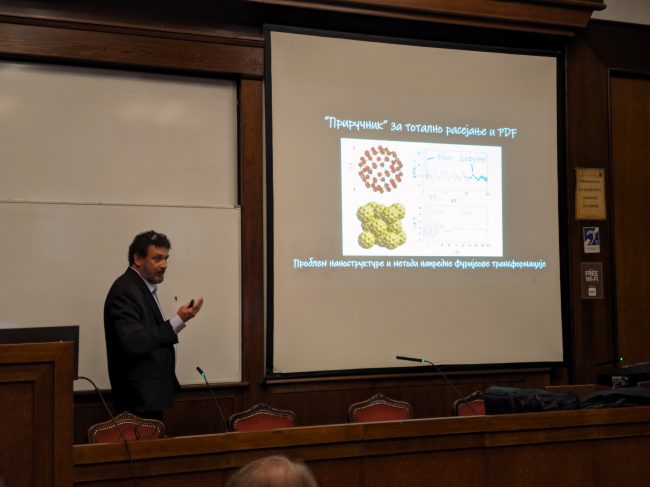
On April 1, 2025, Dr. Emil Božin from the Institute of Physics Belgrade delivered a lecture titled "Detection of Nanoscale Hidden Phases in Quantum Materials at Large Research Facilities" at the Ilija M. Kolarac Endowment. This event was part of the "New Materials" public lecture series, organized in collaboration with the Institute of Physics in Belgrade.

Dr. Božin discussed the use of advanced experimental setups at large-scale research facilities—such as synchrotrons, neutron sources, and free-electron lasers—to investigate the relationships between structure and properties in solid-state physics and chemistry. The lecture focused on hidden, emerging, and precursor states of electronic phase transitions and their role in enabling and controlling technologically relevant properties of quantum materials, from charge density waves to high-efficiency thermoelectricity. A key method highlighted was total scattering based on the atomic pair distribution function, crucial for studying such elusive states of matter.

Open post

Seminar on Embedded Dynamical Mean Field Theory by Dr. Gheorghe Lucian Pascut

Seminar by Dr. Gheorghe Lucian Pascut on Embedded Dynamical Mean Field Theory

Date:

Place:

Type of Activity:

March 27th 2025

IPB

D&C&E activity

On March 27, 2025, Dr. Gheorghe Lucian Pascut from MANSiD Research Center and the Faculty of Forestry at Stefan Cel Mare University (USV), Suceava, Romania, delivered a seminar titled "Predictive Power of the Embedded Dynamical Mean Field Theory (eDMFT) for the Electronic-Structural Interplay in Correlated Materials" at the Institute of Physics Belgrade, in the "Zvonko Marić" lecture hall.

Dr. Pascut presented the capabilities and predictive potential of eDMFT in modeling complex correlations between electronic and structural properties in advanced materials. We thank Dr. Pascut and all attendees for their valuable contributions!

Abstract:
In this talk we will give an overview of the embedded dynamical mean field theory (eDMFT) [1, 2] perspective on materials such as AMnO3 (A = Bi and La) perovskites, CaFeO3, RNiO3 nickelates (R = La and Nd) and RNiO2 nickelates (R = La and Nd) in order to show the capabilities of the eDMFT method to describe site and orbital selective states. For example, (1) in AMnO3 perovskites we are addressing the multiple first-order transitions, in particular we will compute the complex temperature-dependent electronic structural-interply and we are finding the existence of novel electronic states where insulating, semimetallic and metallic orbitals coexist. (2) in CaFeO3 we show that the high oxidations states can also be explained by orbital selective states.  We will also demonstrate de the predictive power of the eDMFT method for both the electronic and structural properties [3]; (3) in RNiO3 nickelates we are describing the electronic-structural interply across a metal to insulator transition (MIT) [4], in particular we will present the predicted structural changes across the MIT, predicted models for the magnetic ground states which differ from the magnetic models proposed before, and we will also present a new interpretation of the K-edge resonant X-ray scattering measurements; (4) in RNiO2 which are part of the recently discovered superconductivity in hole doped infinite-layer nickelates, we will present the theoretically proposed temperature-correlation phase diagram for the LaNiO2 prototype compound, and we show Fermi liquid (FL) versus non-FL and magnetic versus non-magnetic Curie-Weiss behaviors [5].
In conclusion I will argue the eDMFT method can be used to understand and quantitatively predict the electronic structural interply in complex correlated materials at finite temperatures.

Part of this work was supported by a grant of the Romanian Ministry of Education and Research, CNCS - UEFISCDI, project number PN-III-P1-1.1-TE-2019-1767, within PNCDI III.

1) http://hauleweb.rutgers.edu/tutorials/
2) http://hauleweb.rutgers.edu/tutorials/Overview.html
3) K. Haule, G. L. Pascut, Scientific Reports 2017, 7, 10375.
4) G. L. Pascut, K. Haule, Phys. Rev. B 2023, 107, 045147.
5) G. L. Pascut et. al., Communications Physics 2023, 6, 45.


Open post

Public Lecture: Dr Nenad Lazarevic “Center for Solid State Physics and New Materials in the World of Quantum Materials: The Iron Age of Superconductivity – the Case of Fe(Se:S)”

Public Lecture: Dr Nenad Lazarevic "Center for Solid State Physics and New Materials in the World of Quantum Materials: The Iron Age of Superconductivity – the Case of Fe(Se:S)"

Date:

Place:

Type of Activity:

March 25th 2025

ILIJA M. KOLARAC ENDOWMENT

D&C&E activity

On March 25, 2025, Dr. Nenad Lazarević from the Institute of Physics Belgrade delivered a lecture titled "The Iron Age of Superconductivity – The Case of Fe(Se:S)" at the Ilija M. Kolarac Endowment. This event was part of public lecture series on new materials, organized in collaboration with the Institute of Physics in Belgrade.

Dr. Lazarević highlighted the role of the Center for Solid State Physics and New Materials in global quantum materials research, particularly through the international project "Hidden Phases in 2D Quantum Materials" (HIP-2D-QM). The lecture focused on the so-called "iron age of superconductivity," examining phononic, spin, and electronic excitations in Fe(Se:S) compounds. He demonstrated how Raman spectroscopy effectively probes charge and spin dynamics in Fe(Se:S) and discussed the impact of uniaxial strain on the lattice dynamics of FeSe.

This presentation offered valuable insights into the fundamental phenomena of quantum materials and the future directions of research in this field.

Open post

Workshop on Visualization and Analysis of Crystal Structures

Workshop on Visualization and Analysis of Crystal Structures

Date:

Place:

Type of Activity:

March 20th 2025

IPB

D&C&E activity

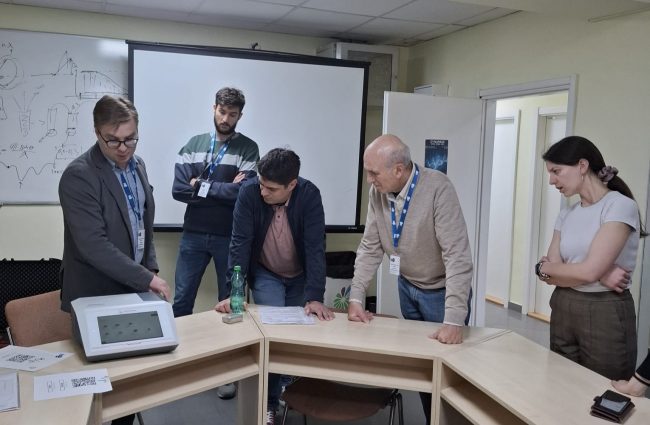
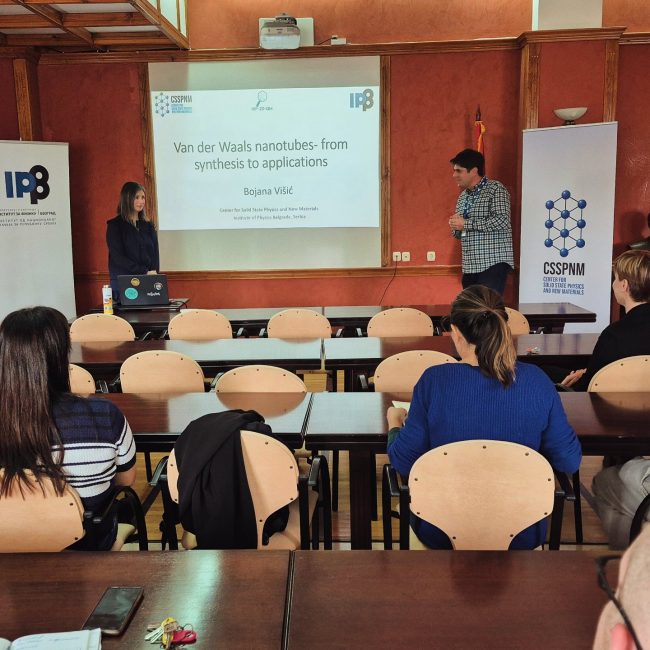
On Thursday, March 20, 2025, the workshop titled "Visualization and Analysis of Crystal Structures Using the VESTA Program" was successfully conducted at the seminar room of the Center for Solid State Physics and New Materials.

Led by Andrijana Solajić and Jelena Pešić, the session was primarily targeted at PhD students, though it also welcomed participants from all academic levels interested in crystallography. Attendees gained hands-on experience with the VESTA software, learning practical skills for visualizing crystallographic .cif files, creating high-quality crystal structure images, and analyzing lattice parameters and interatomic distances.

This workshop is part of the HIP-2D-QM project's ongoing initiatives aimed at spreading excellence, enhancing skills, and building capacity in advanced materials research.

We thank all participants for their active engagement and look forward to hosting more skill-building workshops in the future!


Open post

Seminar on Atomic Layer Deposition by Dr. Ivna Kavre Piltaver

Seminar on Atomic Layer Deposition by Dr. Ivna Kavre Piltaver

Date:

Place:

Type of Activity:

February 26th 2025

IPB

D&C&E activity

On February 26, 2025, Dr. Ivna Kavre Piltaver from the Faculty of Physics and the Centre for Micro- and Nanosciences and Technologies, University of Rijeka, delivered a seminar entitled "Atomic Layer Deposition of Semiconductor Thin Films for Photocatalytic Application" at the Institute of Physics Belgrade, in the "Zvonko Marić" lecture hall.

Dr. Kavre Piltaver introduced advanced methods of atomic layer deposition (ALD) for semiconductor thin films, discussing their promising applications in photocatalysis and environmental technologies. The seminar encouraged active discussion and valuable exchange of expertise among attendees.

This event reflects the Center for Solid State Physics and New Materials' ongoing efforts to strengthen regional scientific cooperation, promote knowledge sharing, and advance collaborative research initiatives within the HIP-2D-QM project.

We sincerely thank Dr. Kavre Piltaver and all participants for their engaging contributions!

Abstract:
Water pollution caused by industrial development and the release of organic pollutants presents a significant environmental challenge. As a result, wastewater recycling has become a global priority, demanding innovative solutions. One promising approach to address this issue is the photocatalytic degradation of pollutants, which utilizes light energy and semiconductor materials to break down organic contaminants into harmless by-products such as carbon dioxide and water. Recent research has concentrated on the development of efficient photocatalysts capable of performing this degradation process effectively. During the seminar, the instruments available at the University of Rijeka, Faculty of Physics, and the Centre for Micro- and Nanosciences and Technologies will be presented, along with the recently published research results, where the photocatalytic activity of copper-doped zinc oxide (ZnO) thin films, synthesized using the atomic layer deposition method, was studied. Analysis using scanning electron microscopy and X-ray diffraction reveals a polycrystalline structure, with a decrease in crystallinity as the Cu content increases. X-ray photoelectron spectroscopy confirms the presence of copper in the Cu+ oxidation state for samples with a Cu content lower than 1 at. %, suggesting that copper ions occupy substitutional CuZn acceptor sites in ZnO, which results in p-type conductivity. Additionally, the Cu-doped ZnO films exhibit enhanced optical absorption in the visible region, as demonstrated by UV-Vis measurements. The reduced electron-hole recombination rate, due to significantly lower intrinsic free charge carrier concentrations in the doped samples, coupled with increased light absorption in the visible region, leads to a substantial improvement in photocatalytic efficiency under simulated sunlight irradiation.

Open post

Meeting with Anton Paar Representatives at IPB

Meeting with Anton Paar Representatives at IPB

Date:

Place:

Type of Activity:

February 26th 2025

IPB

Outreach


On February 26, 2025, a meeting was held at the Institute of Physics Belgrade between the ERA Chair HIP-2D-QM team members, IPB Director Dr. Aleksandar Bogojević, and representatives of Anton Paar GmbH, Graz Austria – Mina Mitrović Jeremić (MCLabor, local representative) and Dietmar Kröger (Distribution Partner Management EMEA Anton Paar). The discussion focused on potential collaboration in advanced measurement techniques and the joint development of research equipment to support cutting-edge material characterization.

Open post

Seminar on Phyllosilicates by Dr. Aleksandar Matković

Seminar on Phyllosilicates by Dr. Aleksandar Matković

Date:

Place:

Type of Activity:

February 20th 2025

IPB

D&C&E activity

On February 20, 2025, Dr. Aleksandar Matković from Montanuniversität Leoben, Austria, delivered an insightful seminar titled "Phyllosilicates as Functional Dielectrics in Two-Dimensional Materials-Based Electronics" at the library reading room "Dr. Dragan Popović," Institute of Physics Belgrade.

Dr. Matković presented recent advances in utilizing phyllosilicates as dielectric components in electronics based on two-dimensional materials, highlighting their potential to improve device performance and functionality. The seminar generated valuable discussions among participants, strengthening scientific exchange and collaboration.

This event was part of the Center for Solid State Physics and New Materials and HIP-2D-QM project's efforts to foster scientific excellence, promote knowledge exchange, and enhance collaboration in advanced materials research.

We warmly thank Dr. Matković and all attendees for their participation and engaging discussions!

Abstract:
Since the last decade, the number of isolated two-dimensional (2D) materials keeps growing exponentially, focusing on high-performance semiconducting and spontaneously polarized materials. However, the number of vdW insulators is extremely disproportional to both semiconductors and metals. Almost exclusively the entire field relies on hexagonal boron nitride. Surely, this cannot be the only technologically relevant system.

Inspired by naturally occurring van der Waals (vdW) crystals – 2D minerals – from the phyllosilicate family, our team works on establishing 2D phyllosilicates as a vdW dielectric platform. In this talk, we will focus first on the potential application of non magnetic phyllosilicates – hBN alternatives – in 2D materials-based transistors, and opportunities for this material class to be used as charge-trap layers for computing in memory applications. Afterwards, we will look into intrinsic magnetism in phyllosilicates, magnetic domains, their layered antiferromagnetic ordering, and ion implementation as a potential pathway to engineer magnetic impurities.

Open post

HIP-2D-QM Project Officially Launched with Kick-off Meeting

HIP-2D-QM Project Officially Launched with Kick-off Meeting

Date:

Place:

Type of Activity:

February 11th 2025

Hybrid (IPB and online)

Administration

We are pleased to announce that the Kick-off Meeting for the ERA Chairs project "HIP-2D-QM: Hidden Phases in 2D Quantum Materials" took place successfully on February 11, 2025. The meeting was conducted in a hybrid format, with participants attending both in-person and virtually via Zoom.
Key topics discussed included an overview of project motivation, objectives, and anticipated outcomes, as well as detailed presentations from Work Package Leaders. A particular highlight was the cross-sectional analysis of the Center for Solid State Physics and New Materials presented by our ERA Chair, Emil Božin, emphasizing strategic plans and integration within the project's framework.

Advisory Board members unanimously verified the Report on the cross-sectional analysis of existing research levels and resources in the Center for Solid State Physics and New Materials.

We extend our gratitude to representatives from the Research Executive Agency (REA), the Directorate-General for Research and Innovation (DG R&I), Advisory Board members, and our hosting institution for their valuable contributions. We look forward to fruitful collaboration and exciting research advancements ahead.
Stay tuned for further updates and developments!

Open post

Presentation of the ERA Chair Project HIP-2D-QM

Presentation of the ERA Chair Project HIP-2D-QM

Date:

Place:

Type of Activity:

February 10th 2025

IPB

D&C&E activity

On Monday, February 10, 2025, at 12 PM, researchers from the Center for Solid State Physics and New Materials presented the recently approved ERA Chair project “Hidden Phases in 2D Quantum Materials (HIP-2D-QM)” at the Institute of Physics Belgrade.
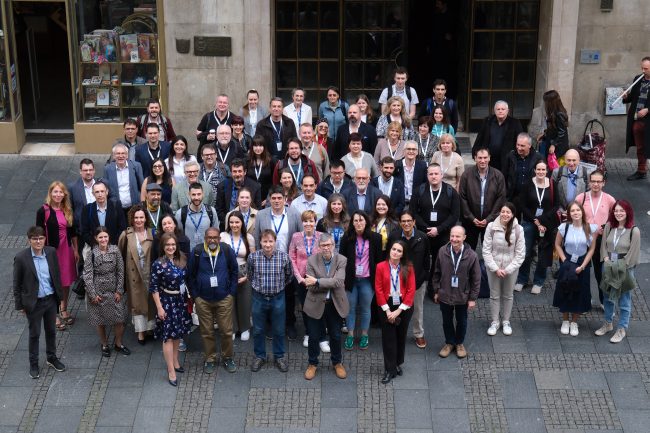
The seminar highlighted the project’s goals, including the establishment of a new research unit focused on advanced structural characterization, integration with existing research directions at the Institute, and the long-term impact on institutional development, training, and international collaboration within the European Research Area (ERA).

Posts navigation

1 2 3 4
Scroll to top