Open post

Electronic Structure and Electrochromic Response of NiO – Seminar by Dr. Igor Pašti

Electronic Structure and Electrochromic Response of NiO - Seminar by Dr. Igor Pašti

Date:

Place:

Type of Activity:

February 06th 2026

IPB

D&C&E activity

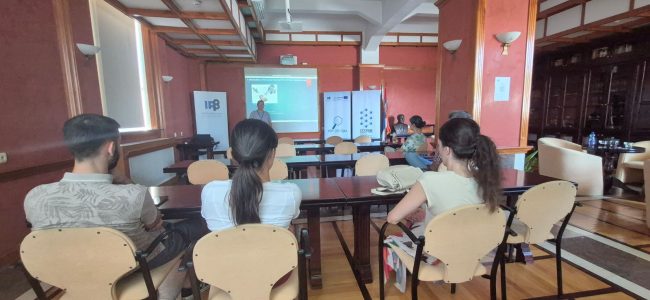
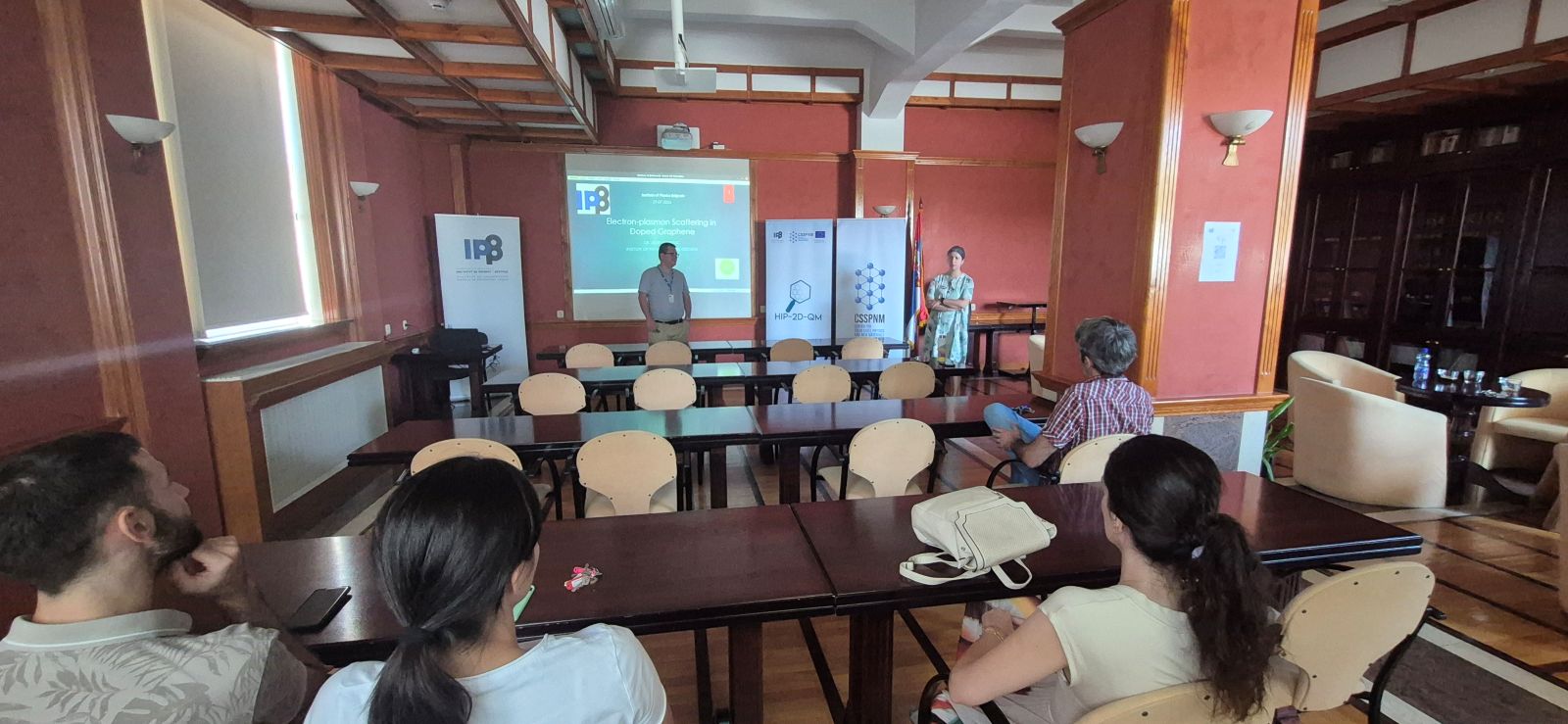
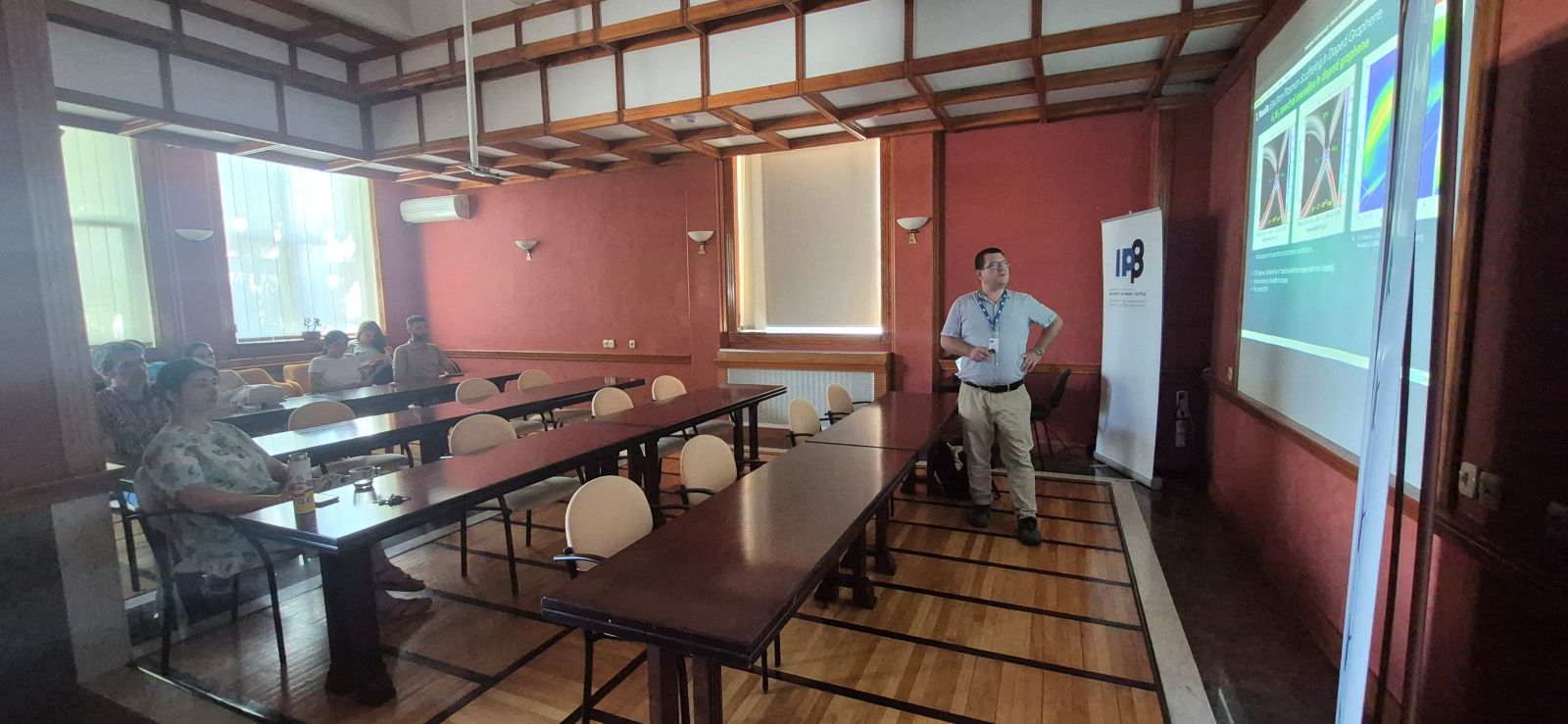
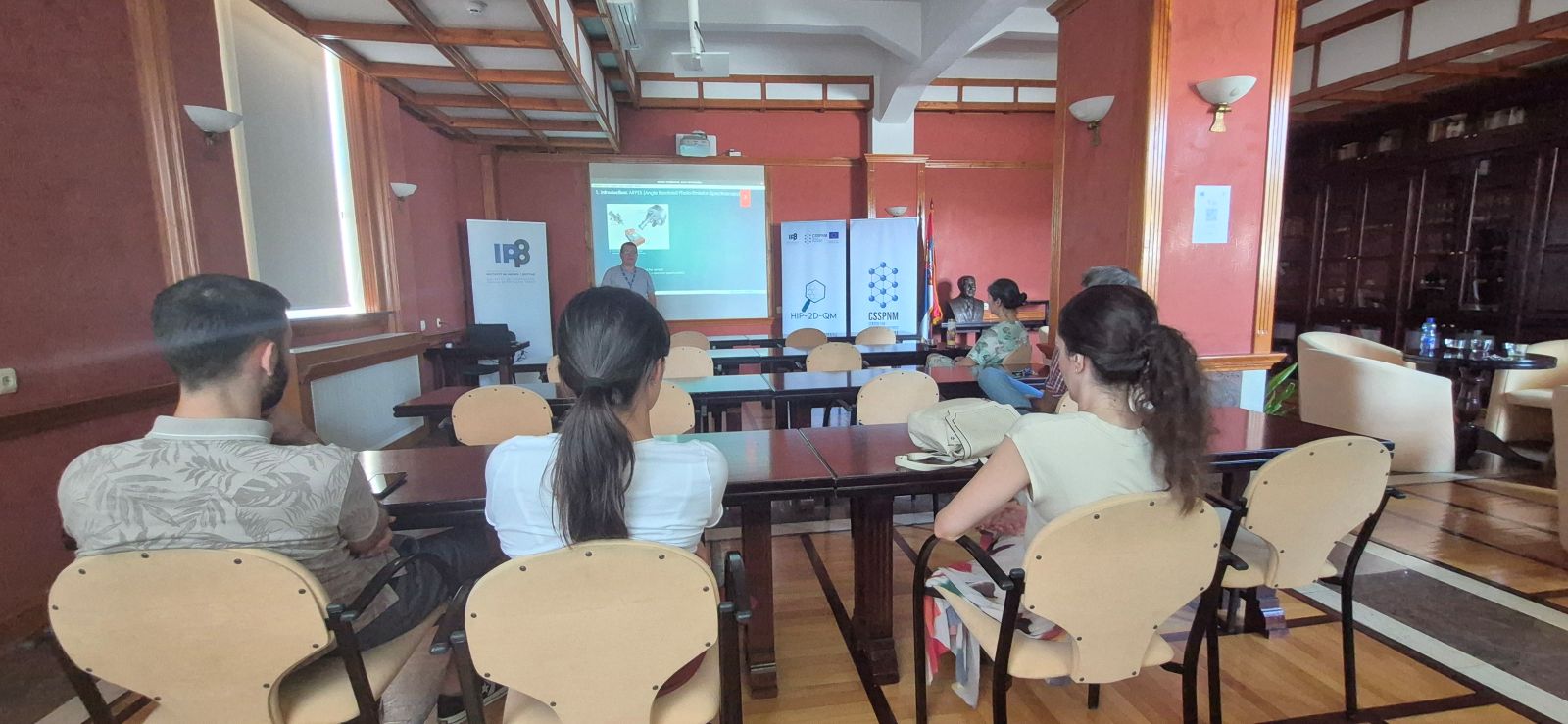
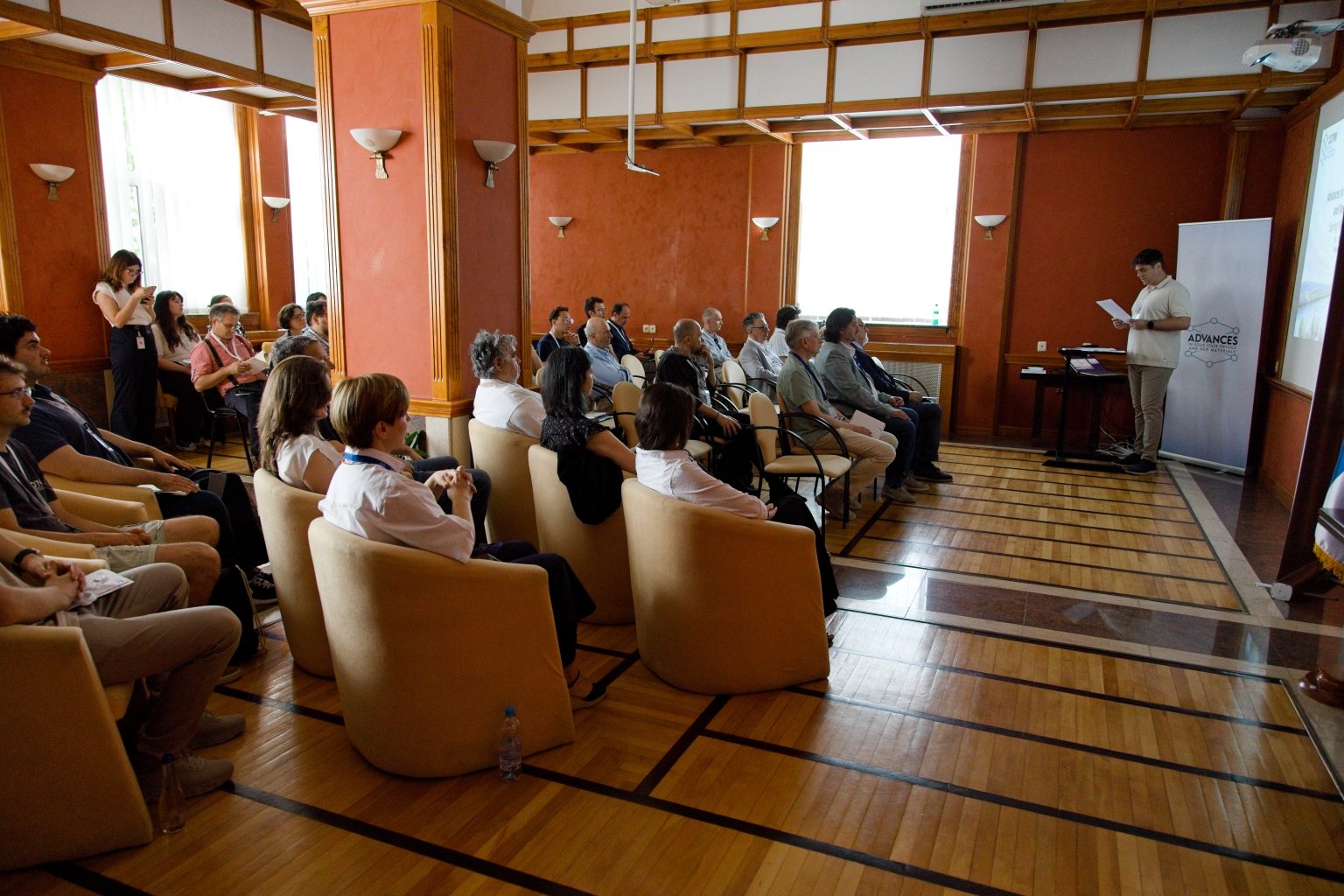
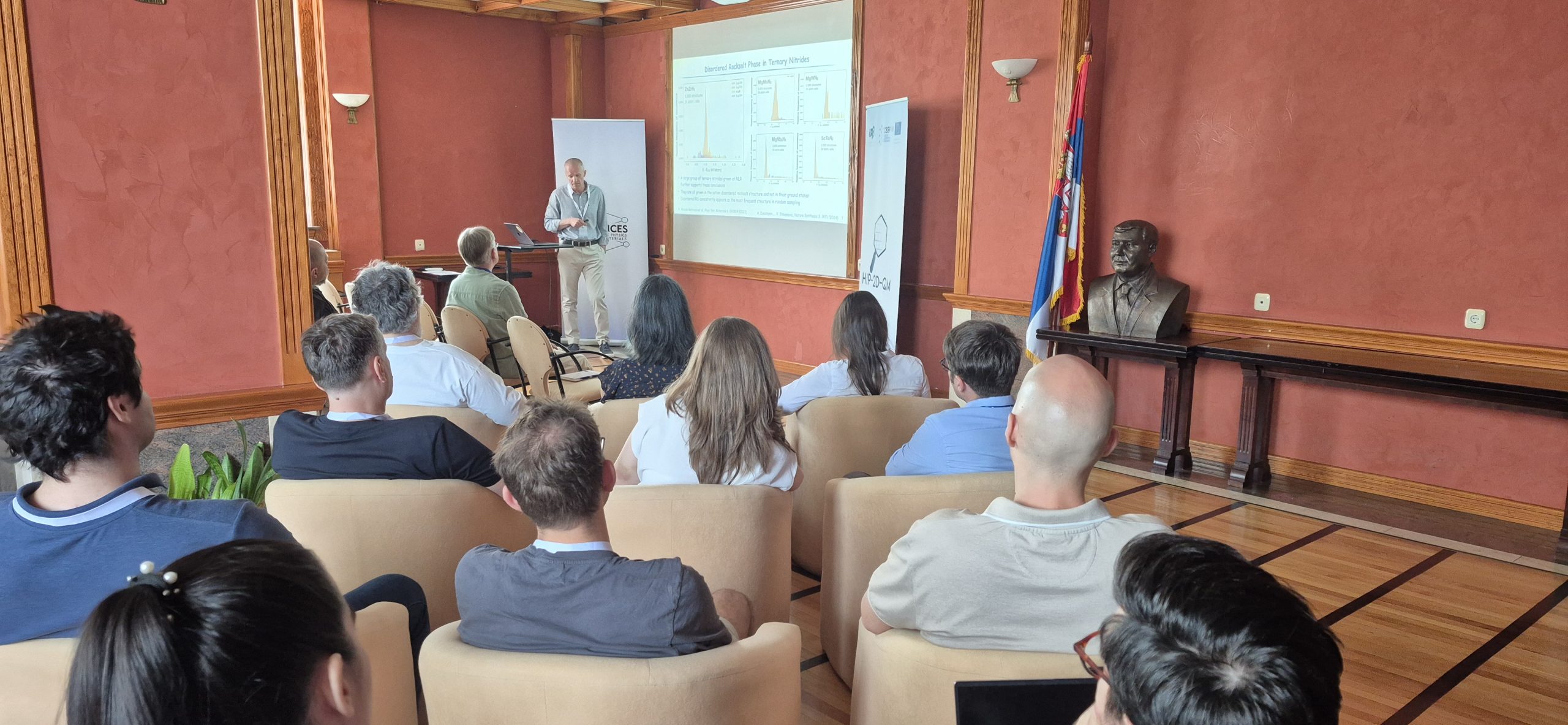
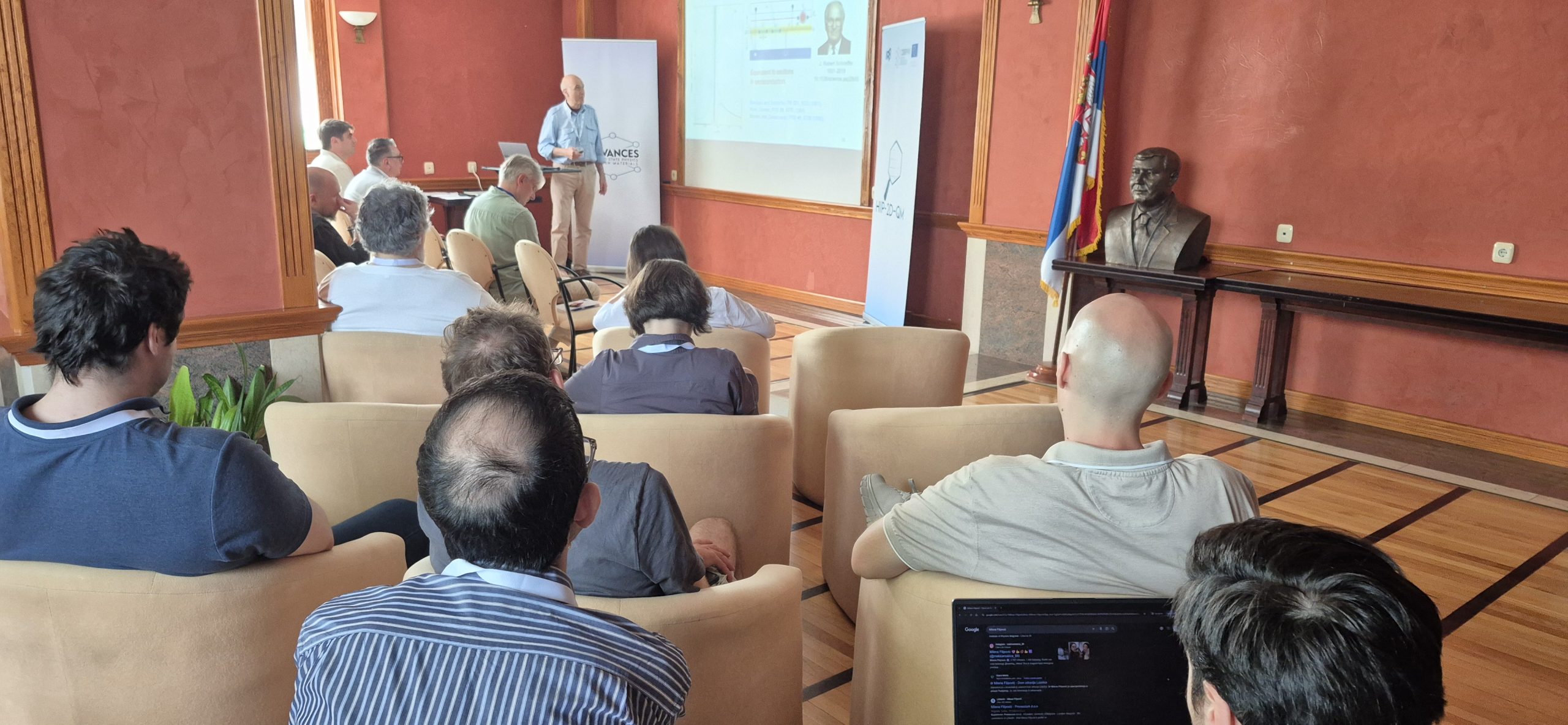
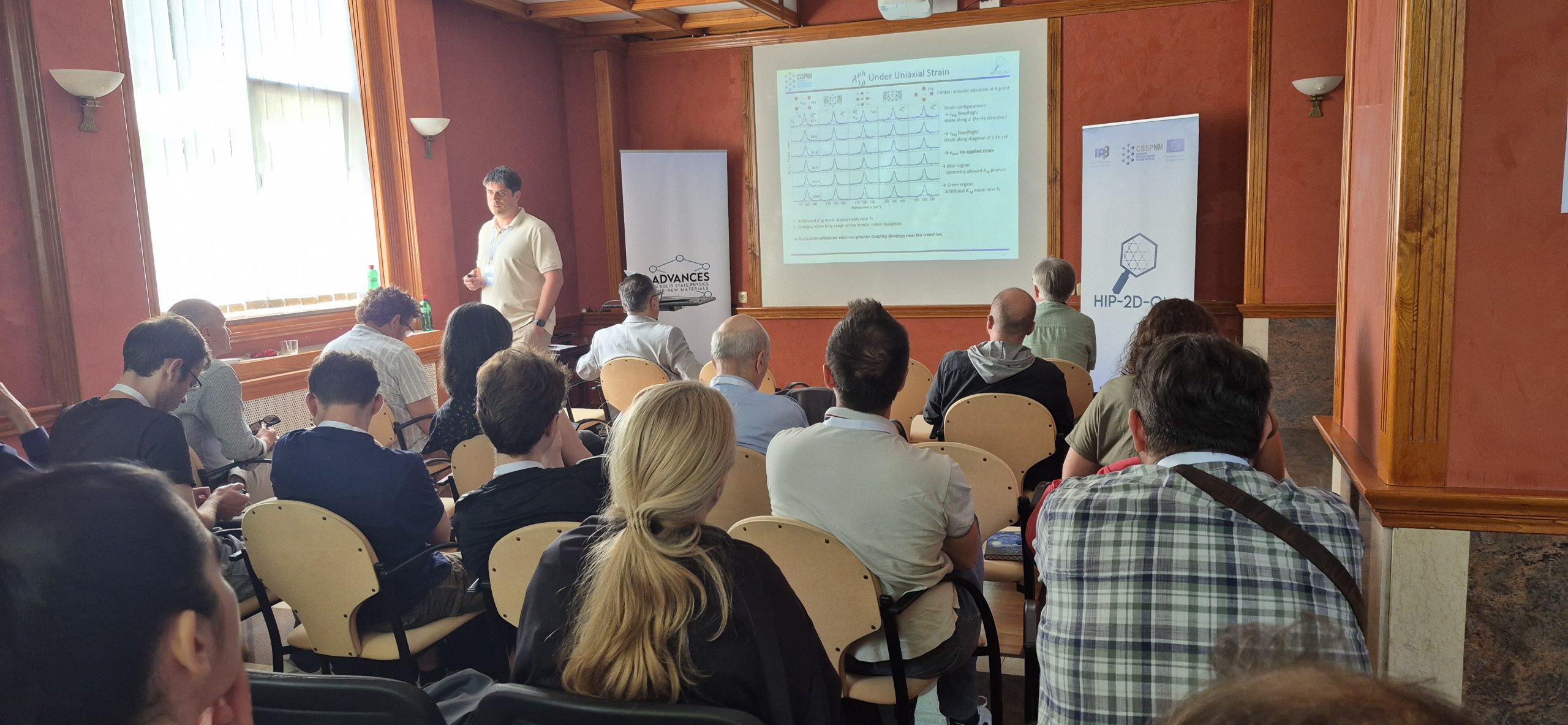
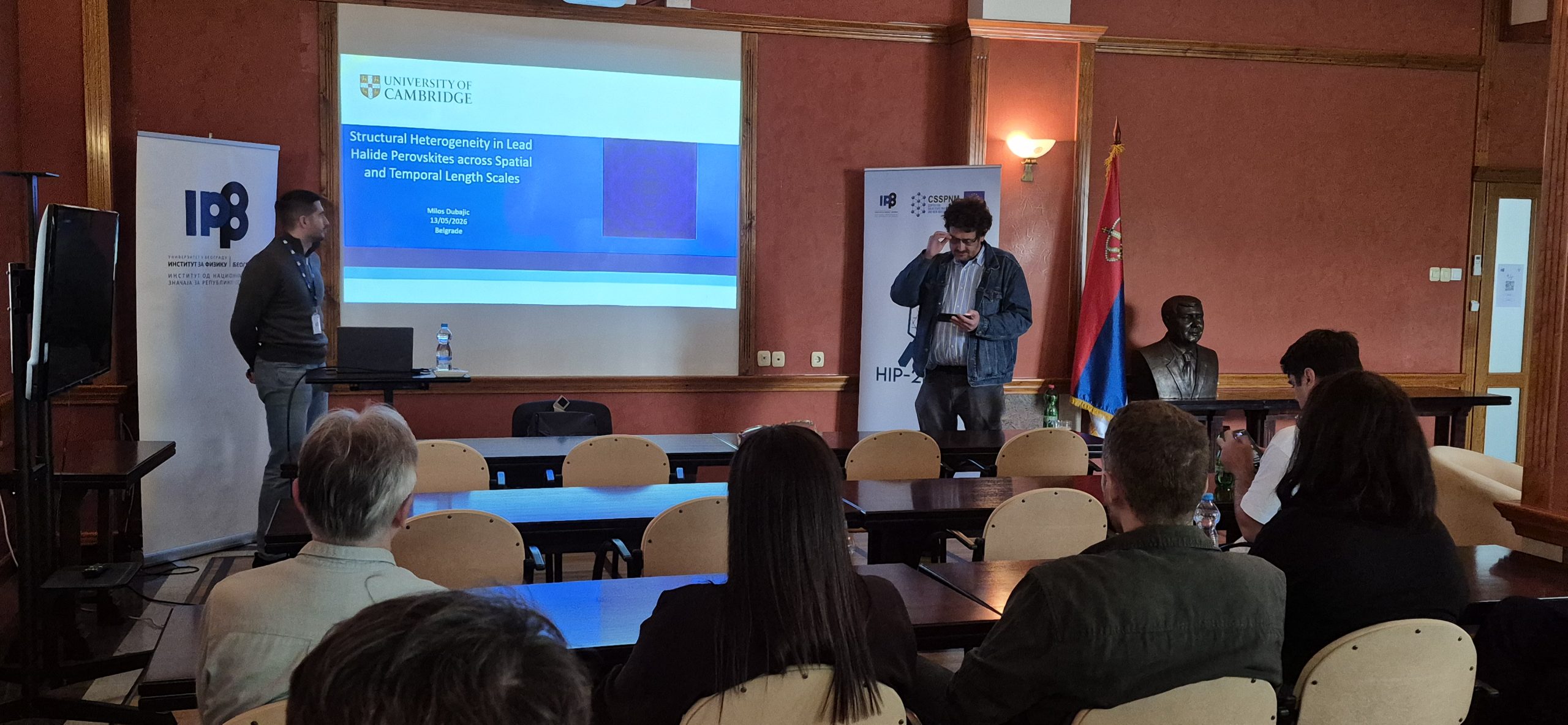
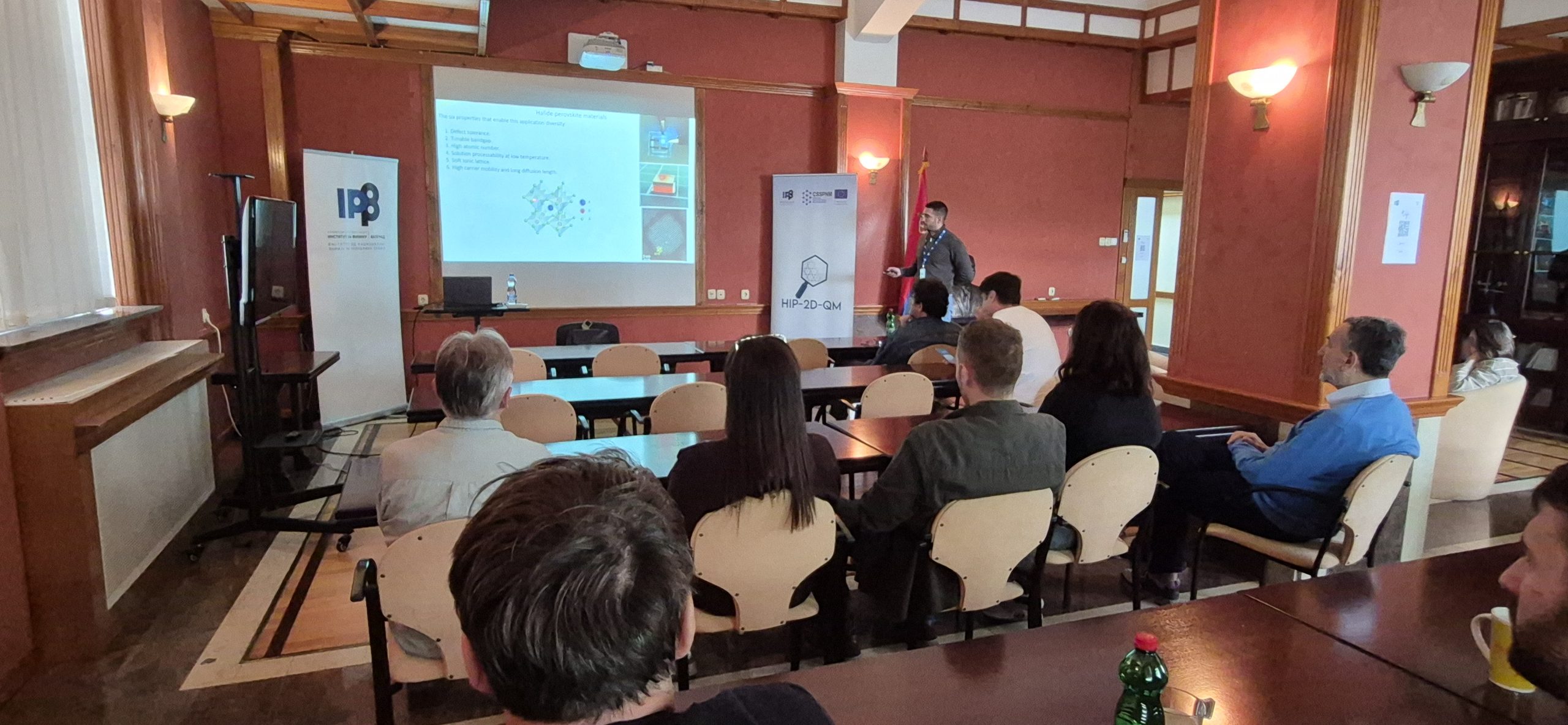
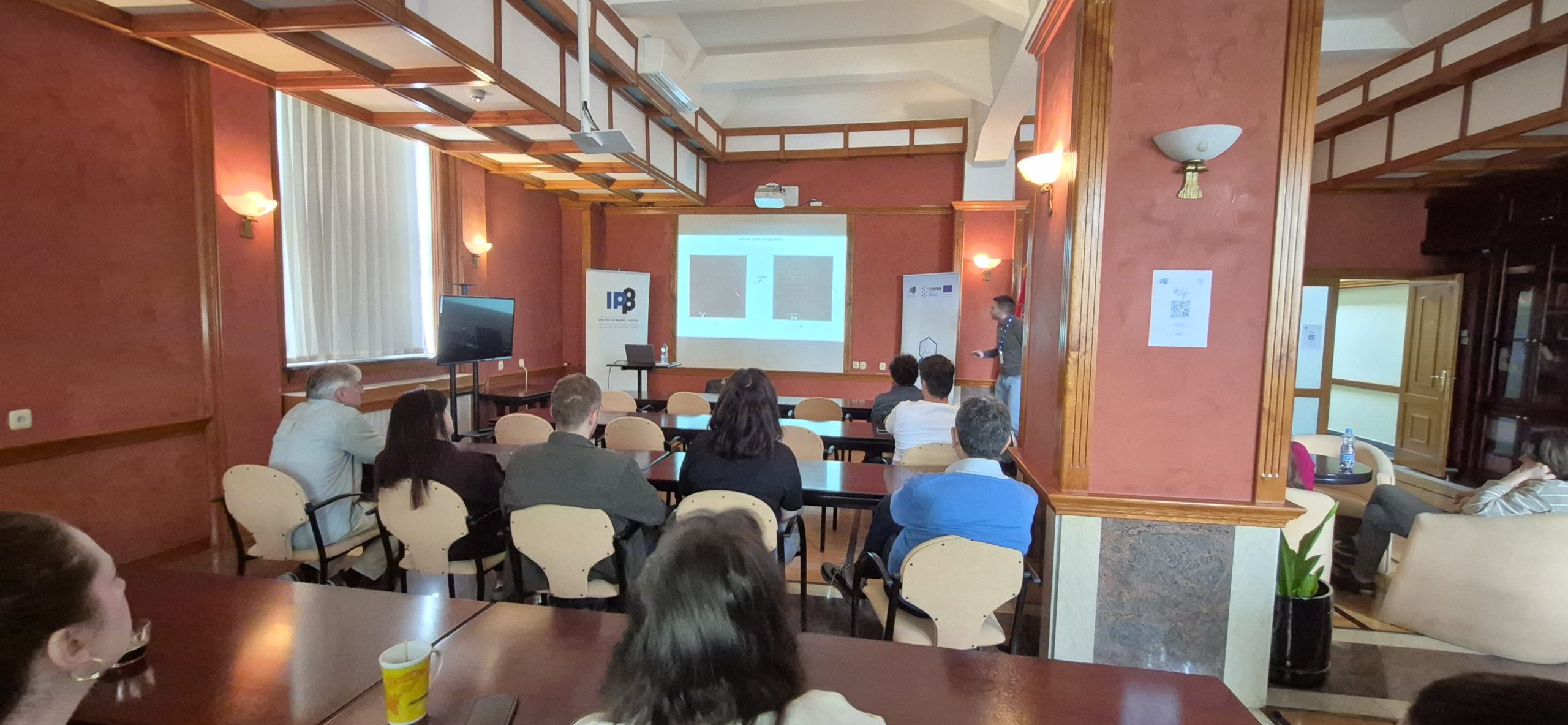
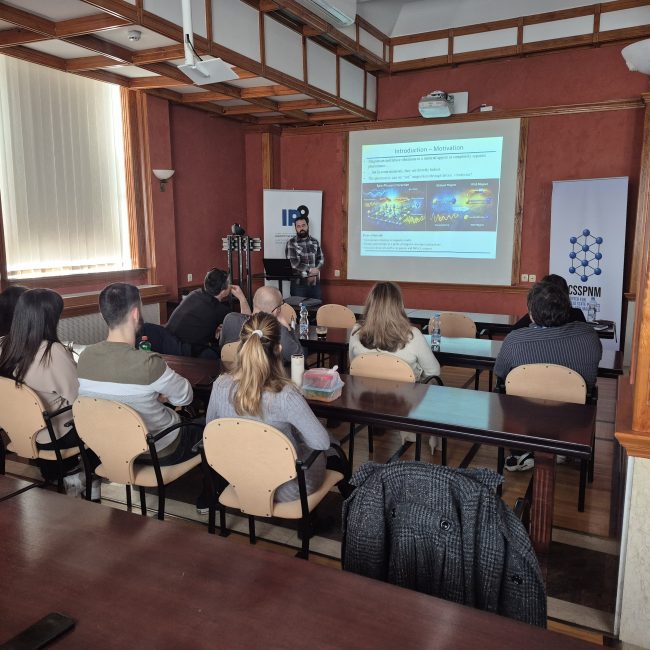
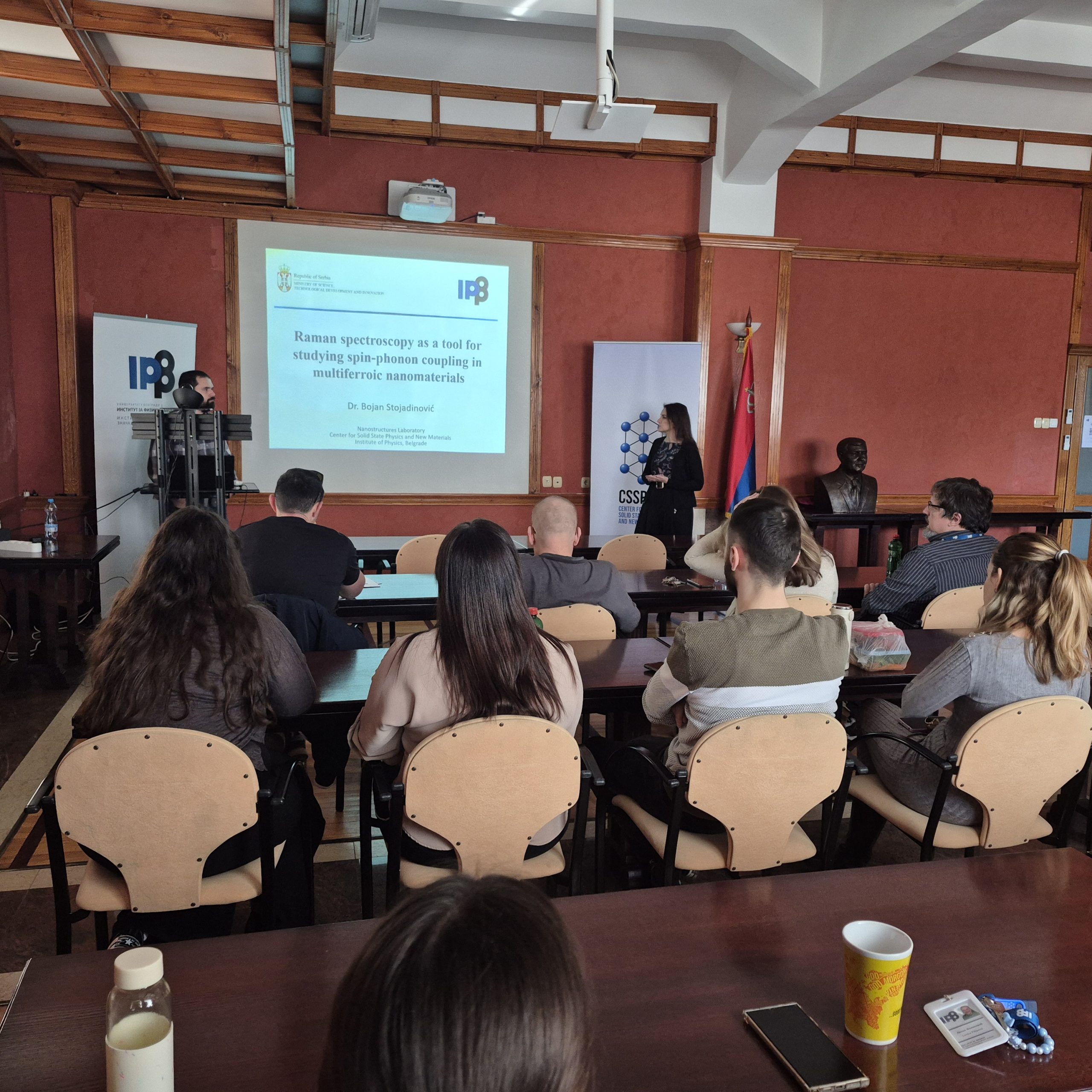
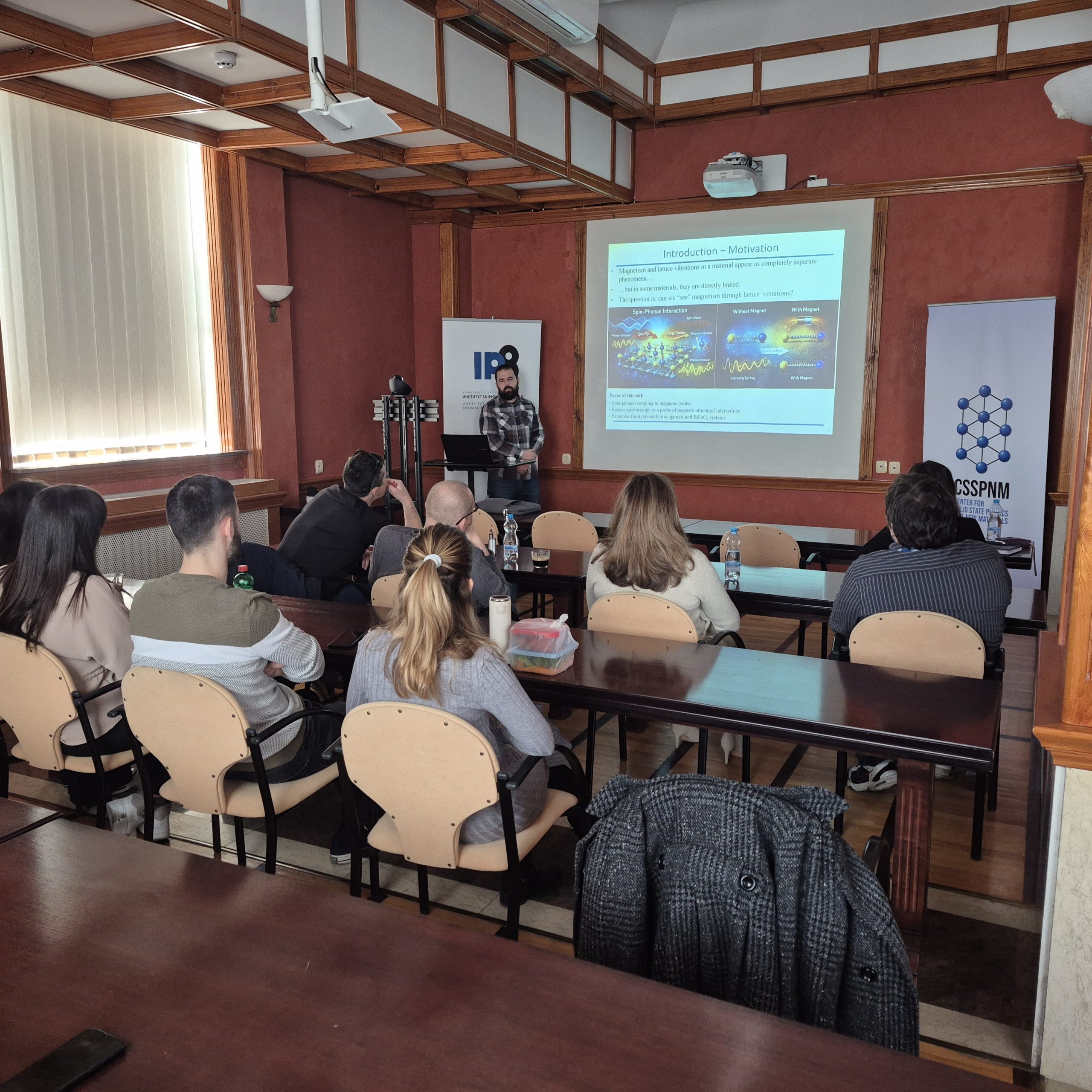
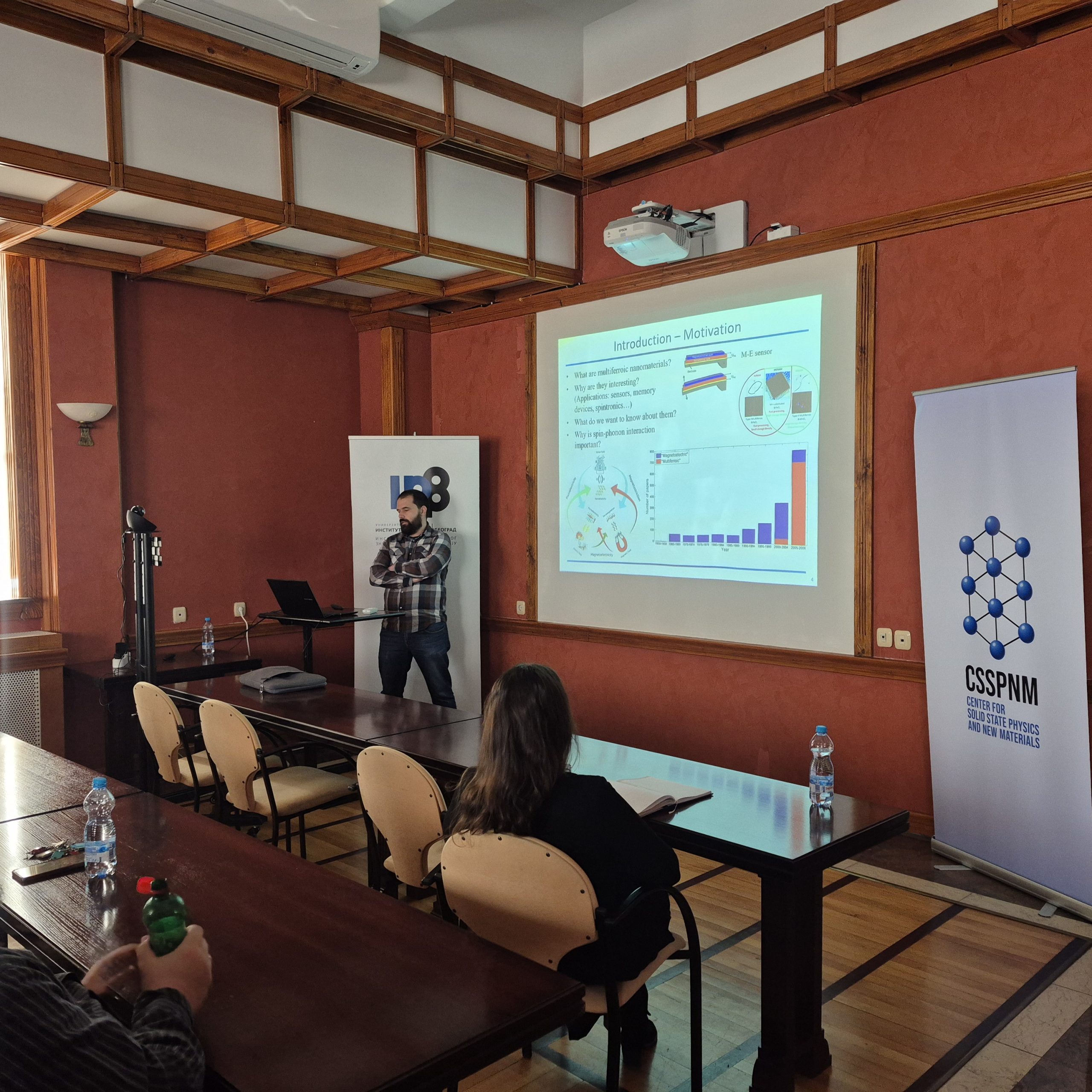
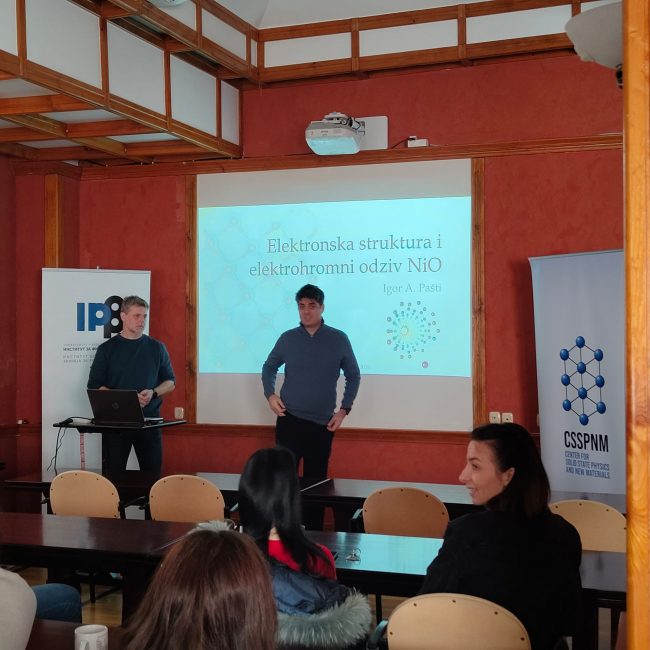
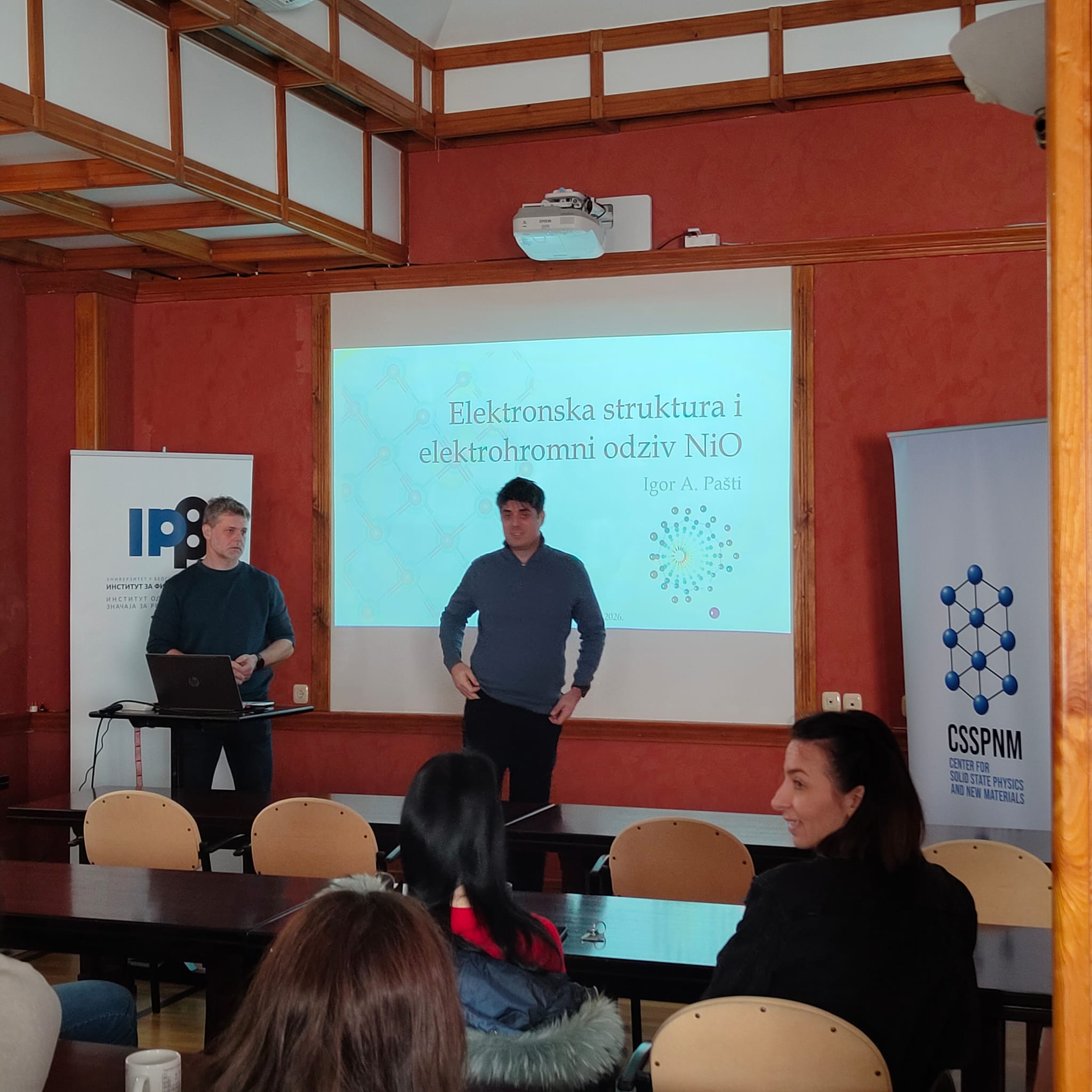
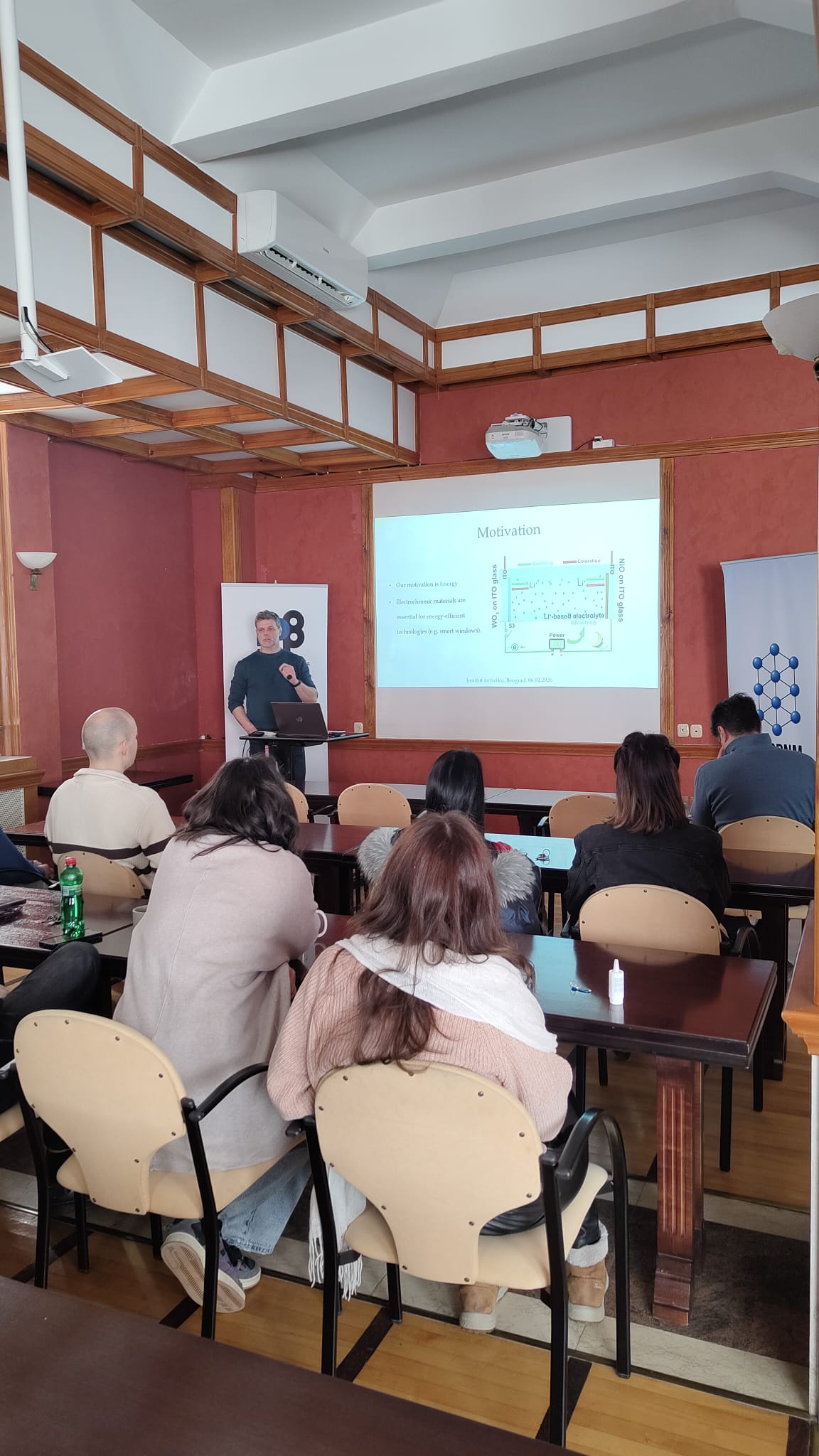
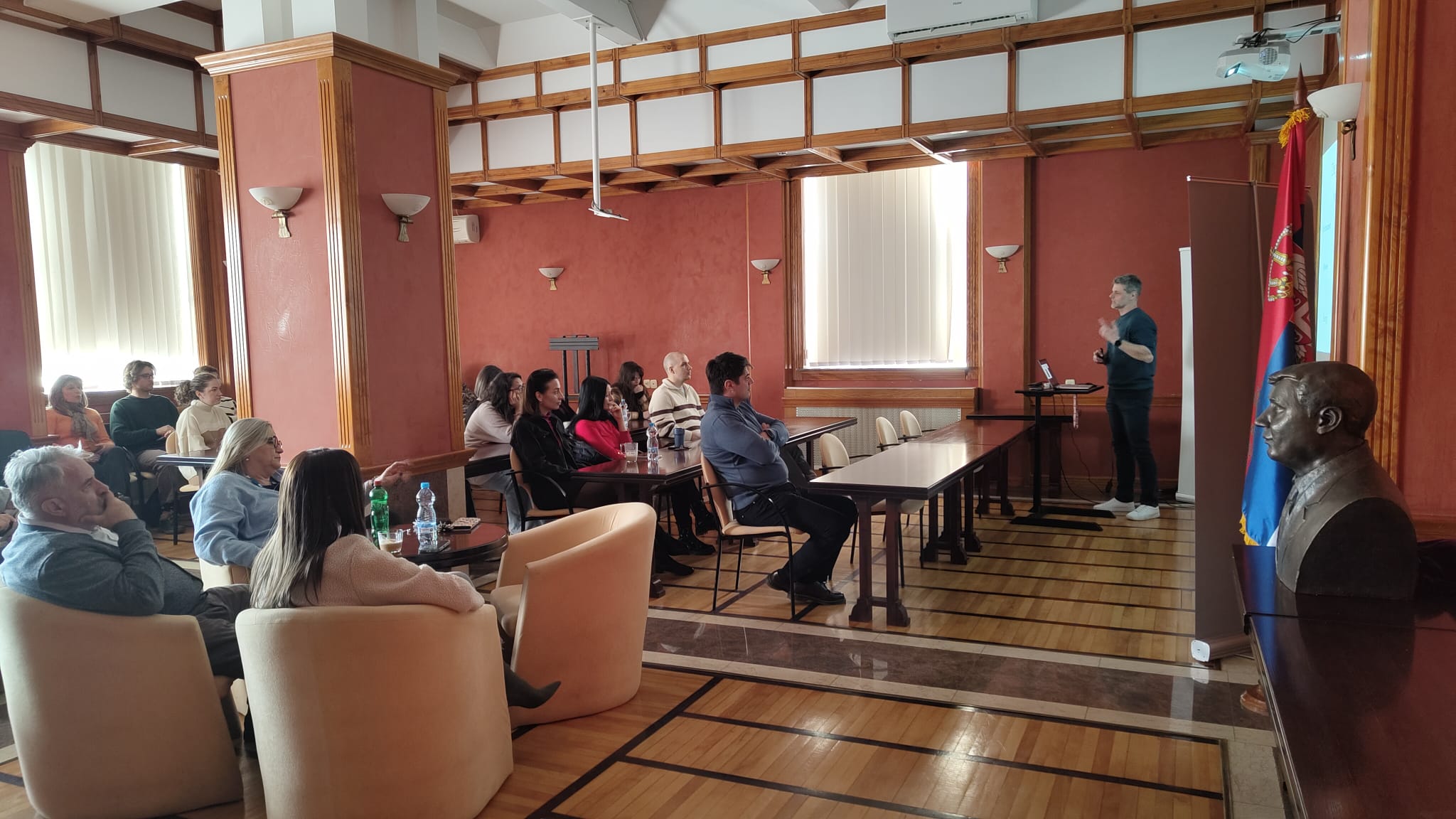
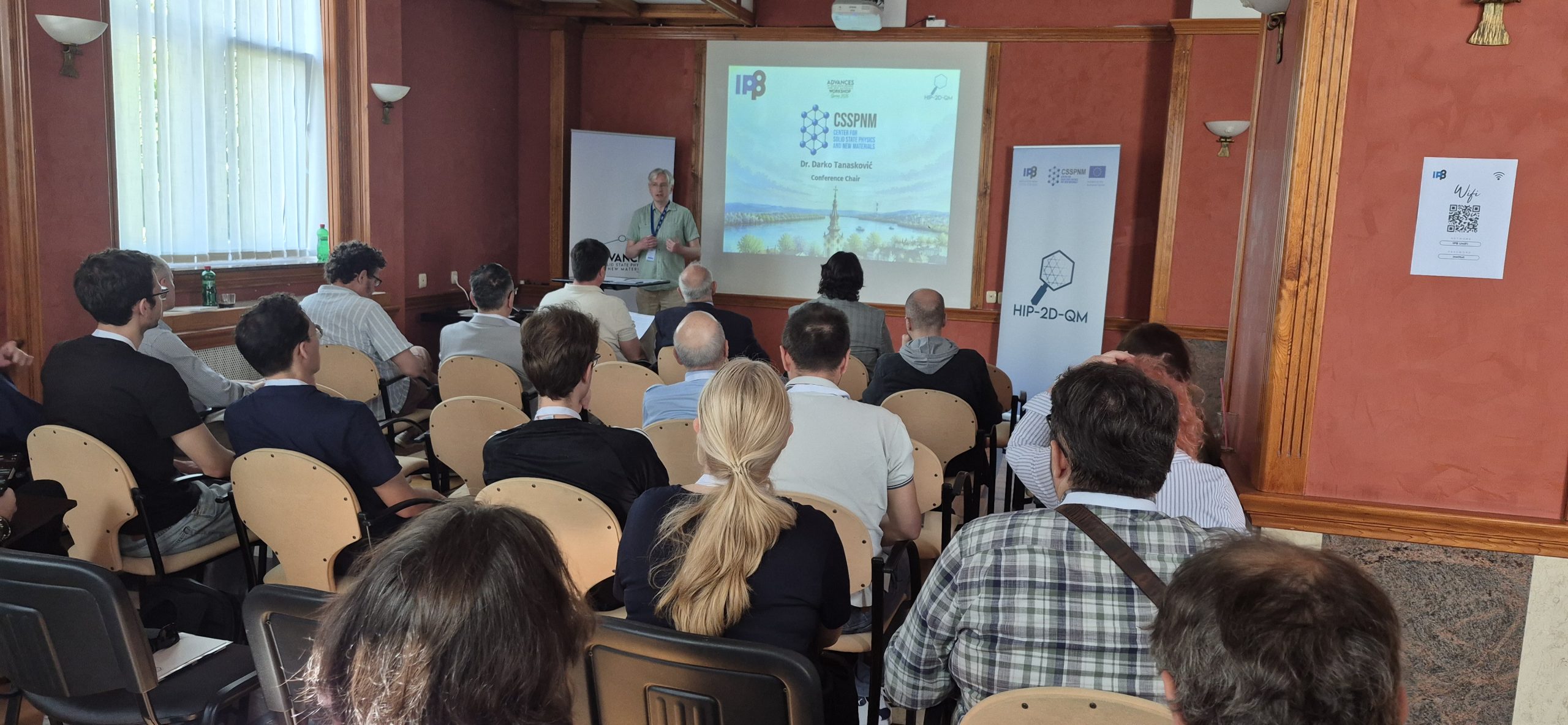
As part of the seminar series of the Center for Solid State Physics and New Materials, a seminar was held on February 6, 2026, at the Institute of Physics Belgrade, in the Dragan Popović Hall. Dr. Igor A. Pašti (University of Belgrade - Faculty of Physical Chemistry, Serbian Academy of Sciences and Arts) delivered the lecture, entitled “Electronic Structure and Electrochromic Response of NiO”.

During the lecture, Dr. Pašti presented a theoretical approach based on DFT+U calculations. He analyzed the electronic structure and electrochromic response of Ni-deficient NiO. In particular, he showed that electrochromic changes do not result only from Ni²⁺/Ni³⁺ redox transformations. Instead, the occupation of polaronic and bipolaronic states also plays an important role. As a result, these states significantly affect the electronic structure and optical properties of NiO.

The seminar was organized within the activities of the Center for Solid State Physics and New Materials and as part of the HIP-2D-QM project, which is funded by the European Union through the Horizon Europe ERA Chair programme. Furthermore, the event contributed to ongoing efforts to strengthen research capacities in solid-state physics, electronic materials, and computational materials science at the Institute of Physics Belgrade.
Open post

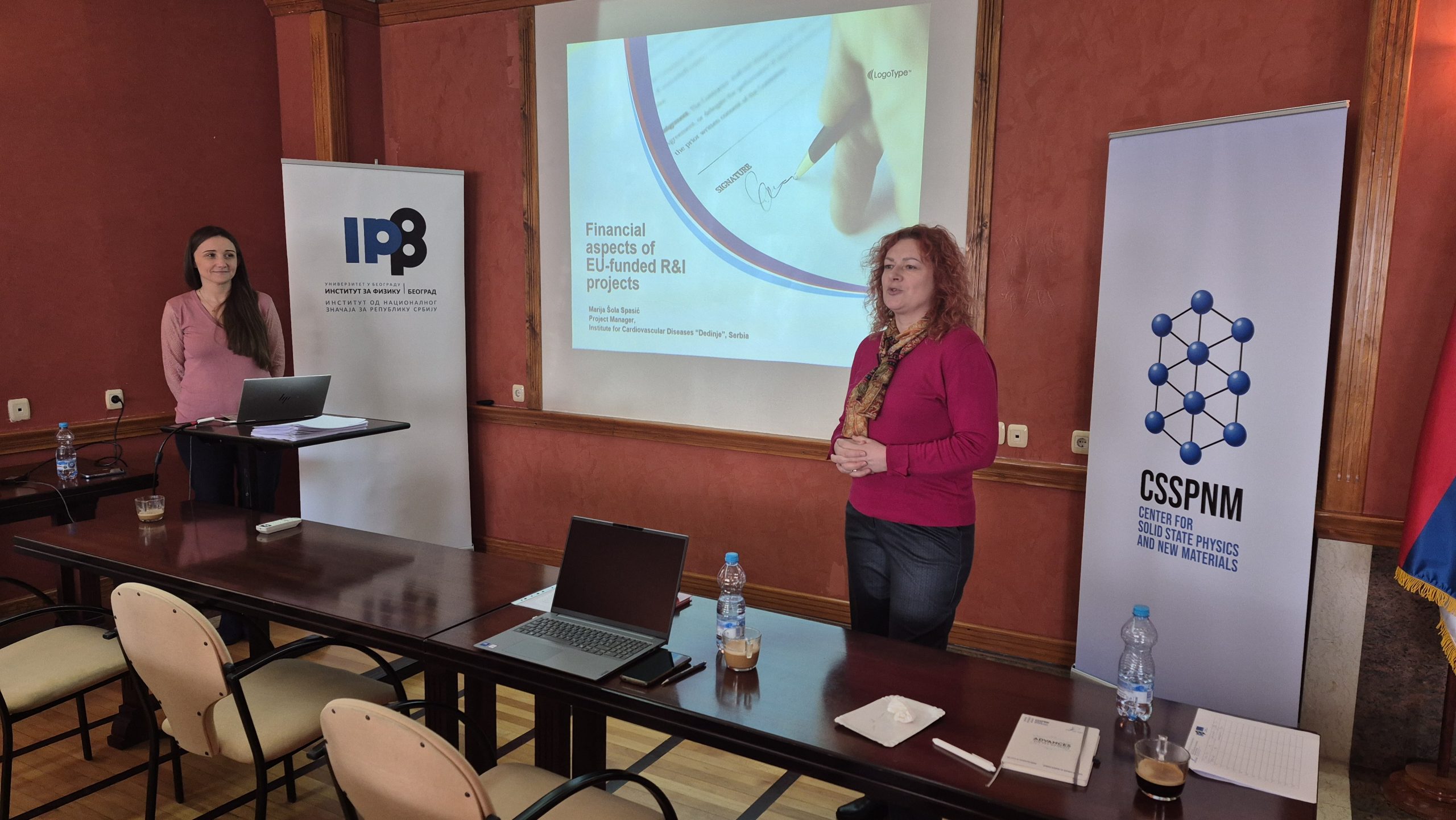
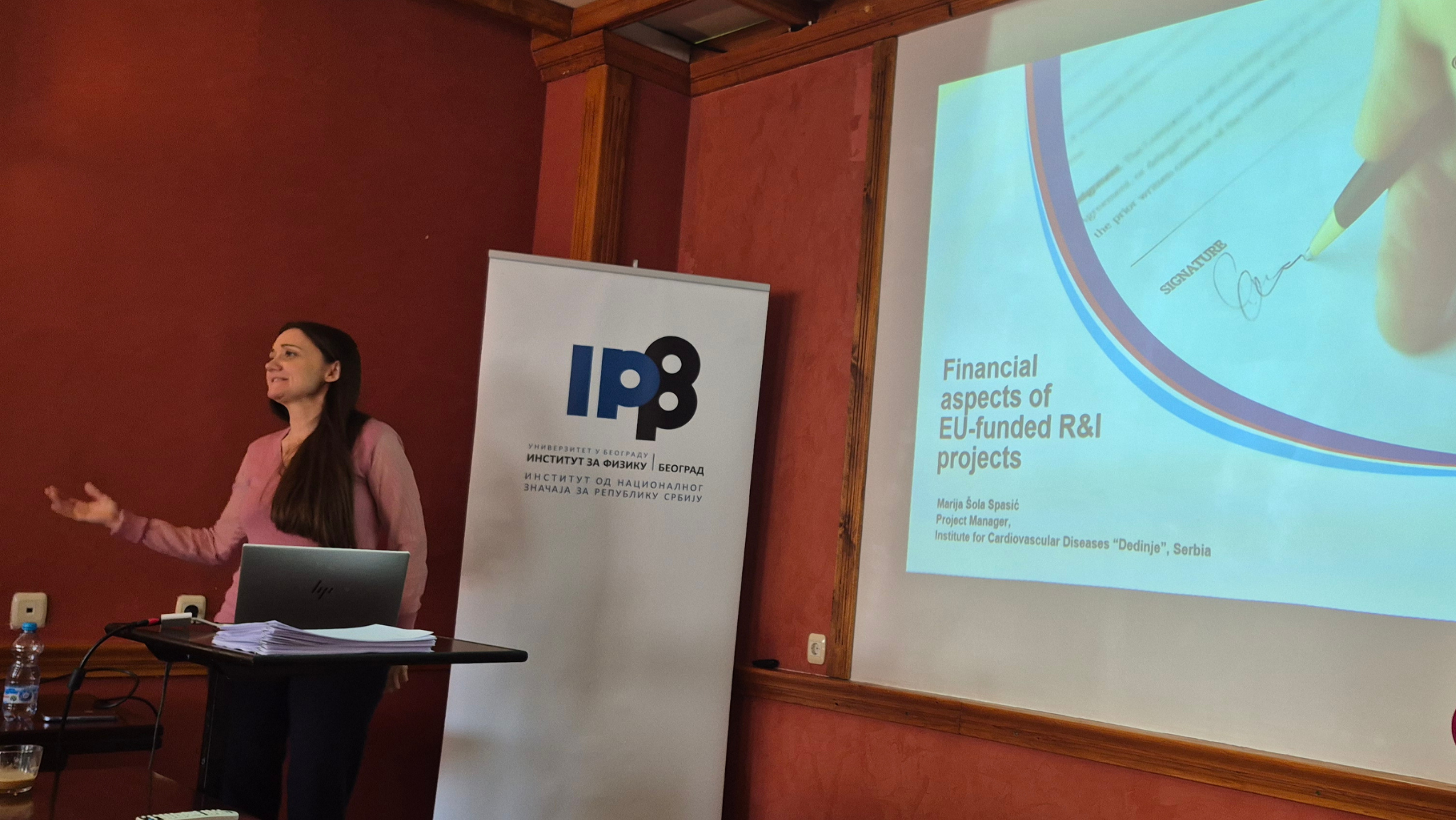
Workshop: Financial Aspects Of EU-Funded R&I Projects

Workshop: Financial Aspects Of EU-Funded R&I Projects

Date:

Place:

Type of Activity:

January 29th 2026

IPB

Training activity

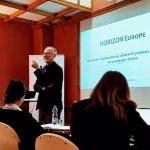
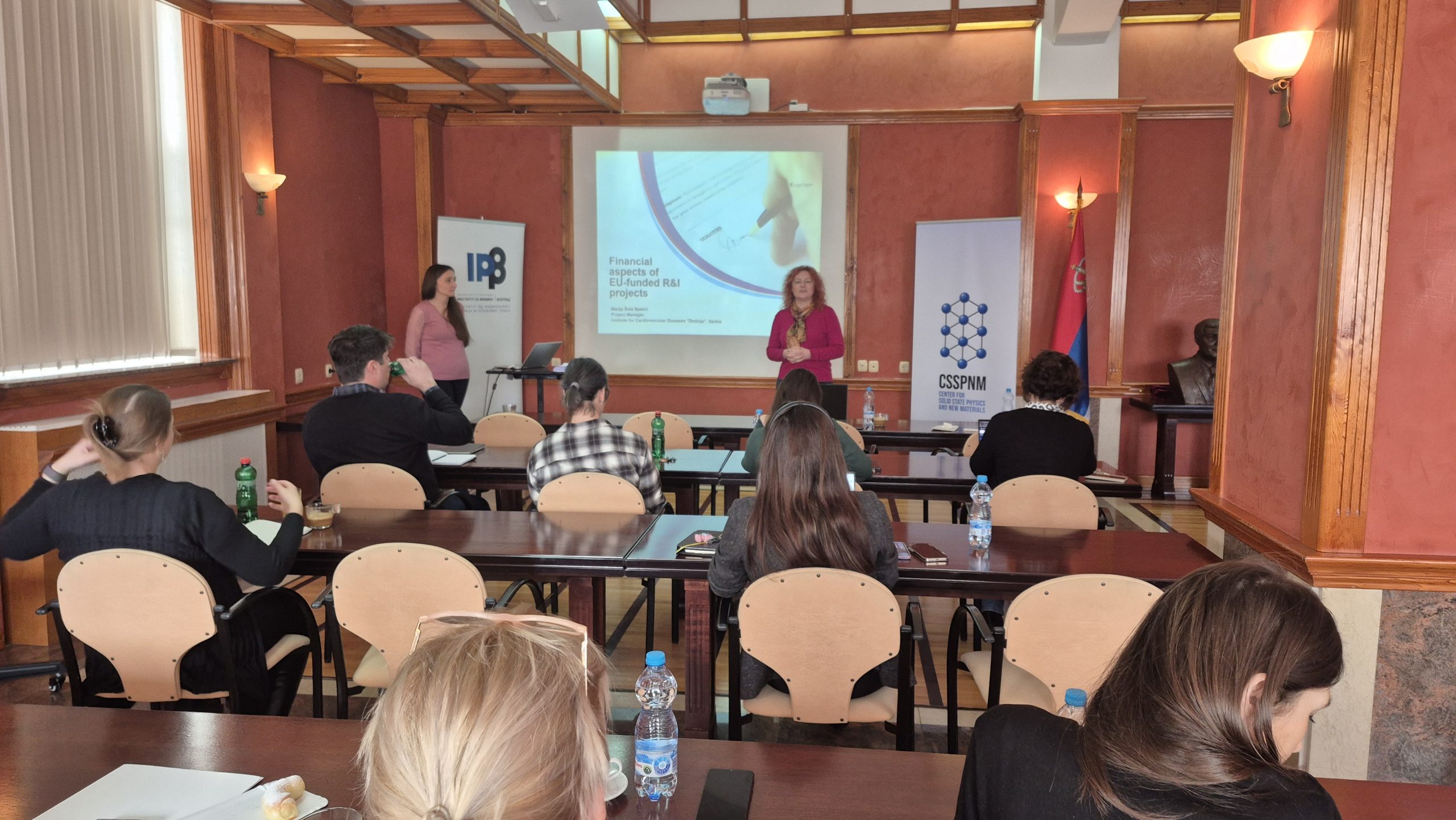
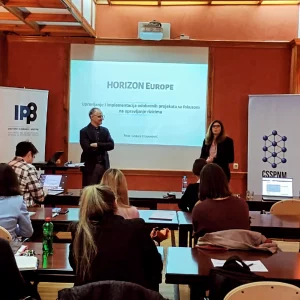
The Institute of Physics Belgrade hosted a workshop titled “Financial Aspects of Horizon Europe Proposals”, organized within the HIP-2D-QM Horizon Europe project as part of its capacity-building activities. The workshop was delivered by Marija Šola Spasić and aimed to strengthen the competencies of researchers and administrative staff in preparing and managing Horizon Europe project proposals.
The session covered key Horizon Europe financial rules, the alignment of EU and national regulations, and personnel costs, with special focus on lump sum calls and practical aspects of budget preparation and implementation. The interactive format enabled participants to deepen their understanding of Horizon Europe funding schemes and enhance institutional readiness for future EU-funded projects.


Open post

Workshop: How to Write a Horizon Europe Twinning Project Proposal

Workshop: How to Write a Horizon Europe Twinning Project Proposal

Date:

Place:

Type of Activity:

January 26th 2026

IPB

Training activity

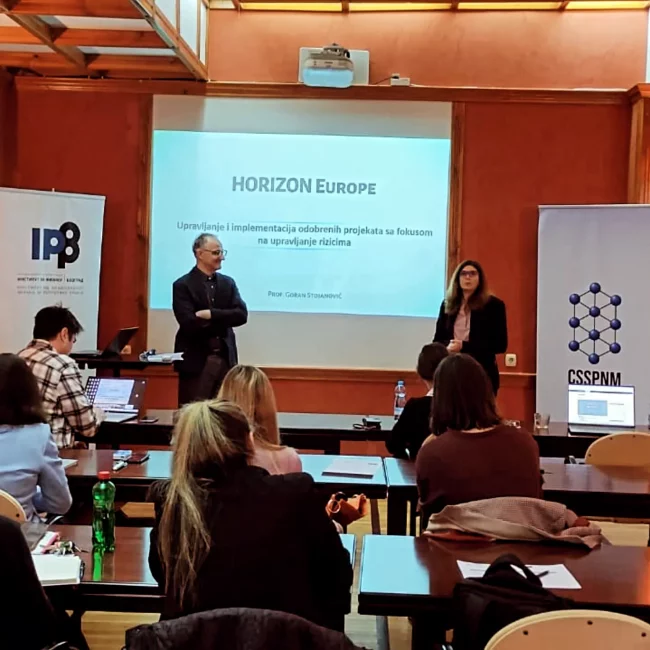
The Institute of Physics Belgrade organized a one-day workshop titled “How to Write a Horizon Europe Twinning Project Proposal” on 26 January 2026. The workshop brought together 21 participants, mainly researchers and staff from the Institute of Physics Belgrade, with a clear focus on preparation for the Horizon Europe Twinning call.

The workshop was led by Prof. Dr. Goran Stojanović and focused on the key objectives, requirements, and evaluation criteria of the Horizon Europe Twinning call. Participants gained insight into how institutions can position themselves for successful participation in the call and strengthen their role in European research collaboration.

The event was organized within the HIP-2D-QM project as part of ongoing capacity-building activities aimed at strengthening the Centre for Solid State Physics and New Materials and enhancing the overall research capacity of the Institute of Physics Belgrade.

The workshop highlighted Horizon Europe Twinning projects as an important instrument for institutional development, international networking, and long-term research excellence.


Open post

Workshop on Integrating Simulations and Experiments for Advanced Applications

Workshop on Integrating Simulations and Experiments for Advanced Applications

Date:

Place:

Type of Activity:

January 22nd 2026

IPB

Training activity

The Workshop on Integrating Simulations and Experiments for Advanced Applications took place on 13 January 2026 at the Serbian Academy of Sciences and Arts (SASA) in Belgrade. The HIP-2D-QM project co-organized the event together with the BLESSED and ULTIMATE-I projects. The workshop brought together 13 participants from 7 institutions.

For HIP-2D-QM, the workshop served as a key dissemination and networking activity. It provided a focused setting to present research that directly supports the project’s main goals. In particular, the discussions emphasized charge transport in two-dimensional materials and the integration of simulations with experiments.

A central contribution came from Dr Jelena Pešić, a member of the HIP-2D-QM project team. In her presentation, “Engineering Current Paths in MoS₂ Nanonetworks for Thin-Film Electronics,” she showed how combining in-operando experimental techniques with network modelling reveals dominant conduction pathways and junction-limited transport. These results strongly align with the scientific objectives of the HIP-2D-QM project.

In addition, speakers from the BLESSED and ULTIMATE-I projects shared complementary results on functional materials, advanced modelling, and industrial applications. As a result, the workshop encouraged knowledge exchange across projects and disciplines.

Overall, the event strengthened collaboration between related EU-funded projects and confirmed the role of HIP-2D-QM in advancing integrated experimental and computational approaches for next-generation electronic materials.


Open post

Training Center for Advanced Structural Analysis Opens, Expanding Research Capacity at IPB

Training Center for Advanced Structural Analysis Opens, Expanding Research Capacity at IPB

Date:

Place:

Type of Activity:

December 12th 2025

IPB

D&C&E activity

The Training Center for the Advanced Structural Analysis has officially opened at the Institute of Physics Belgrade, marking an important step in strengthening experimental infrastructure for materials research. The Horizon Europe ERA Chair project HIP-2D-QM (Hidden Phases in 2D Quantum Materials) enabled the establishment and full equipping of the Training Center, which now supports advanced structural characterization and training activities. The Training Center includes a state-of-the-art X-ray diffractometer (XRD) valued at €350,000, the largest single equipment investment, together with additional instrumentation and dedicated training facilities. These resources enable advanced atomic- and molecular-scale structural research that was previously unavailable in Serbia and position the Center as a regional training hub for the Western Balkan region.

A New Hub for Advanced Structural Characterization

At the opening ceremony, Dr Nenad Lazarević, Head of the Center for Solid State Physics and New Materials and Coordinator of the HIP-2D-QM project, addressed the audience. Welcoming remarks were also delivered by Academician Zoran Knežević, President of the Serbian Academy of Sciences and Arts (SANU); Academician Zoran V. Popović, Vice President of SANU and founder of the Center for Solid State Physics and New Materials; and Prof. Dr Aleksandar Bogojević, Director of the Institute of Physics Belgrade.

In their speeches, the speakers addressed the development of the Institute of Physics, the strengthening of its Centers of Excellence, and advances in research infrastructure and scientific output. They emphasized the importance of establishing the Training Center for the further development of the Center for Solid State Physics and New Materials, for the Institute as a whole, and for the advancement of science and research in Serbia.

Opening Ceremony and Institutional Perspectives

Addressing the strategic role of ERA Chair support in shaping the Center’s long-term vision, Dr Nenad Lazarević emphasized the impact of the HIP-2D-QM project on sustainable development:

“The ERA Chair support made it possible for us to realize our vision. This year, the Center for Solid State Physics and New Materials marks thirty years of existence and stands as one of the Institute’s four Centers of Excellence. Over the years, we have developed and continuously improved a wide range of experimental and analytical methods in materials science, through which the Center has gained international recognition.”

Dr Lazarević also highlighted the new scientific directions enabled by the HIP-2D-QM project, particularly through international knowledge transfer:

“The project introduced new methodologies and previously unexplored research directions. The return of Dr Emil Božin from Brookhaven National Laboratory brought advanced techniques, such as pair distribution function (PDF) analysis, which—supported by the new X-ray diffractometer—will now be transferred to future generations of researchers in our region.”

From the perspective of national scientific policy and institutional support, Academician Zoran Knežević, President of SANU, emphasized the Academy’s commitment to physics research:

“The Institute of Physics will have a reliable partner and full support within the Serbian Academy of Sciences and Arts, which closely follows the development of physics and the work of the Institute.”

Reflecting on the long-term development of the Center for Solid State Physics and New Materials, Academician Zoran V. Popović, Vice President of SANU and founder of the Center, highlighted continuity and progress:

“In this case, the story has a happy ending. Not only has what we founded and initiated been preserved, but the research conditions and activities of the Center have been significantly improved.”

Focusing on the broader institutional impact of the new Training Center, Prof. Dr Aleksandar Bogojević, Director of the Institute of Physics Belgrade, praised the achievements of the research team:

“The team working at the Center for Solid State Physics and New Materials is outstanding. They not only succeed in securing million-euro research projects, but they also manage to extract the maximum scientific value from each of them.”

State-of-the-Art X-Ray Diffraction Capabilities

The new X-ray diffractometer directs X-rays at a sample, such as a powder or a thin film. The beam scatters from the sample’s crystalline structure at different angles. A detector records the scattered radiation and produces a diffraction pattern (diffractogram). The instrument reveals structural features that were previously “invisible” using earlier equipment. It is equipped with two types of X-ray sources and enables measurements across a wide temperature range, from −190 to +600 °C, allowing advanced temperature-dependent and in-situ studies.

Following the formal ceremony, guests toured the new laboratory, where Dr Jelena Pešić and Dr Bojana Višić presented the capabilities of the XRD instrument and demonstrated its operation.

The new diffractometer provides a genuine “window into the unknown,” enabling the identification of previously unobserved phenomena and unknown material properties. While this represents a major advancement in local research capacity, it also lays the foundation for future studies at major European research infrastructures, such as synchrotron and neutron facilities. Results obtained with the Institute’s XRD will serve as a critical entry point for further high-precision investigations.

The opening of the Training Center for the Advanced Structural Analysis marks a key milestone of the HIP-2D-QM project, strengthening experimental infrastructure, expanding research capacity, and reinforcing the Institute of Physics Belgrade as a leading regional hub for advanced materials research.

Photos by Bojan Džodan

Open post

Gender Strategy Training: Key Insights for Research Institutions

Gender Strategy Training: Key Insights for Research Institutions

Date:

Place:

Type of Activity:

December 2nd 2025

IPB

Training activity

The Gender Strategy Training was held yesterday, 1 December 2025, from 10:00 to 13:00 CET, via Zoom.
The session focused on strengthening the understanding and implementation of gender equality strategies within research and academic environments.

Dr Romana Jordan and Dr Maja Remškar from the Jožef Stefan Institute (Ljubljana, Slovenia) delivered insightful lectures on gender equality in science, the development and implementation of Gender Equality Plans (GEPs), and examples of European best practices.

The workshop explored approaches for developing gender equality strategies across research institutions, including tools, data, and actions needed for effective implementation, and discussed how these frameworks can be applied within the Center for Solid State Physics and New Materials (CSSPNM).

The training was organised within the Horizon Europe ERA Chair project HIP-2D-QM and by the Diversity and Gender Dimension Board of the CSSPNM.


Open post

Strengthening Data Management Capacities: HIP-2D-QM at the FAIRmat Users Meeting

Strengthening Data Management Capacities: HIP-2D-QM at the FAIRmat Users Meeting

Date:

Place:

Type of Activity:

November 20th 2025

Berlin, Germany

Training activity

On 20 November 2025, Bojana Višić and Jelena Pešić from the HIP-2D-QM project (Institute of Physics Belgrade) participated in the Seventh FAIRmat Users Meeting, held at the Centre for the Science of Materials Berlin (CSMB).

The event brought together researchers, data stewards, and research infrastructure developers from the fields of physics, chemistry, and materials science to discuss the implementation of the FAIR (Findable, Accessible, Interoperable, Reusable) principles. The program highlighted practical tools and workflows within the NOMAD data infrastructure for collecting, structuring, sharing, and analyzing research data.

The meeting also included hands-on sessions covering graphical user interface (GUI) tools, data structuring, role-based usage, plugin development, and NOMAD Oasis administration.

Participation in this event supports the HIP-2D-QM project’s ongoing efforts to strengthen capacities in research data management and to develop open, high-quality data pipelines for 2D quantum materials, reinforcing its contribution to the European open-science community.

Open post

Symmetry-Based Explanation of Dispersions in Two-Dimensional Materials – Seminar by Dr. Vladimir Damljanović

Symmetry-Based Explanation of Dispersions in Two-Dimensional Materials - Seminar by Dr. Vladimir Damljanović

Date:

Place:

Type of Activity:

November 06th 2025

IPB

D&C&E activity

As part of the seminar series organized by the Center for Solid State Physics and New Materials at the Institute of Physics Belgrade, a lecture titled “Symmetry-based Explanation of Dispersions in Two-Dimensional Materials” was held on Wednesday, November 5, 2025, by Dr. Vladimir Damljanović.

Two-dimensional (2D) materials are systems in which atomic nuclei are periodically arranged in two spatial directions and finite in the third, orthogonal one. Examples include graphene, silicene, and transition metal dichalcogenides. Each 2D material belongs to one of 80 possible symmetry groups. The lecture presented the connection between different types of electronic and phononic dispersions (quasiparticles) in a given 2D material and the symmetry group to which that material belongs.

The presentation was based on published results [1–9] concerning non-magnetic 2D materials both with and without spin–orbit coupling.

This seminar was organized as part of the activities related to the HIP-2D-QM project and the ongoing efforts to strengthen the research capacities of the Center for Solid State Physics and New Materials.

Open post

HIP-2D-QM Project Launches Lecture Series on Solid State Physics and New Materials

HIP-2D-QM Project Launches Lecture Series on Solid State Physics and New Materials

Date:

Place:

Type of Activity:

October 31st 2025

IPB

D&C&E activity

The Center for Solid State Physics and New Materials launches a series of recorded lectures from the international conference “Advances in Solid State Physics and New Materials”, held from May 19–23, 2025, to celebrate 30 years of the Center for Solid State Physics and New Materials.

Jointly organized by the Institute of Physics Belgrade and the Serbian Academy of Sciences and Arts (SANU), the conference brought together leading researchers in solid state physics and materials science.

The series begins with a lecture by Prof. Peter Hirschfeld (University of Florida, USA), titled “Superconductivity: There’s plenty of cream at the bottom.” The lecture was delivered on May 21, 2025, in the Grand Hall of SANU.

The series is aimed at promoting scientific exchange and sharing research highlights presented during the conference. This activity is part of the HIP-2D-QM project, implemented under the Horizon ERA Chair call and funded by the European Union, which seeks to strengthen research excellence and innovation capacity at the Institute of Physics Belgrade.

Watch the full lecture series on YouTube

Open post

Policy Dialogue: GRC European Regional Meeting & Institute of Physics Belgrade

Policy Dialogue: GRC European Regional Meeting & Institute of Physics Belgrade

Date:

Place:

Type of Activity:

October 23rd 2025

IPB

Scientific Community & Policy Makers

As part of the ERA Chair project HIP-2D-QM – Hidden Phases in 2D Quantum Materials, a high-level policy dialogue meeting was held at the Institute of Physics Belgrade (IPB). The meeting gathered representatives of the Global Research Council (GRC) European Regional Meeting, the Science Fund of the Republic of Serbia (SFRS), and the Center for Solid State Physics and New Materials (CSSPNM-IPB).

This policy dialogue is part of the project’s activities dedicated to dissemination, exploitation, and communication, aiming to strengthen the connection between European research policy and national research institutions in Serbia. The GRC European Regional Meeting, co-organized by Science Europe, HUN-REN Hungarian Research Network, and the Science Fund of Serbia, brings together major European research and innovation funding agencies.

Within this framework, the visit to IPB highlighted Serbia’s growing contribution to European research cooperation and showcased the achievements of CSSPNM-IPB. Researchers presented their scientific results, ongoing projects, and international collaborations developed under the HIP-2D-QM ERA Chair initiative.

By engaging policy makers, research funders, and scientists, HIP-2D-QM continues to build bridges between science, innovation, and policy—enhancing both the visibility and impact of Serbian research across Europe.

Photos by Bojan Džodan

Posts navigation

1 2 3 4
Scroll to top